

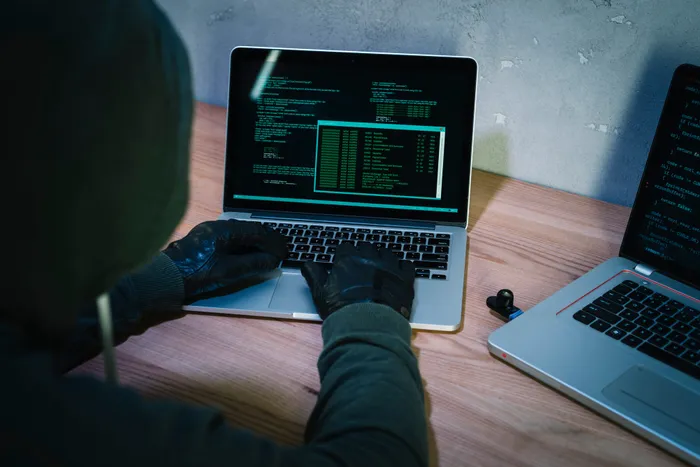
The surge in credential theft, phishing, and social engineering has shown that static credentials, no matter how complex, are no match for persistent attackers.
Image: Supplied
FOR years, passwords stood as the first — and often only — line of defence between users and cybercriminals. Yet as attacks became more sophisticated, this once-reliable shield turned into a vulnerability.
The surge in credential theft, phishing, and social engineering has shown that static credentials, no matter how complex, are no match for persistent attackers. Cybercriminals no longer need to “hack in” when they can simply “log in” using stolen details.
This reality has driven organisations to rethink authentication altogether, giving rise to a more dynamic and resilient approach: Multi-Factor Authentication (MFA).
MFA, in its simplest form, adds another layer of verification beyond passwords: something you know, something you have, or something you are. While this approach dramatically improves security, traditional MFA alone is no longer enough.
Threat actors have evolved, finding ways to bypass static MFA systems through session hijacking, SIM swapping, or sophisticated phishing kits that intercept verification codes in real time. This has paved the way for the next stage of identity security — adaptive MFA.
Cybersecurity is no longer about erecting walls; it’s about anticipating movement. Adaptive MFA embodies this philosophy by integrating intelligence and context into the authentication process. Instead of treating every login attempt equally, it evaluates risk in real time.
Factors such as device type, location, IP reputation, and user behaviour help determine whether an access attempt is legitimate or suspicious.
For example, suppose a user typically logs in from Johannesburg using a company laptop but suddenly tries to access the system from another country at 2am. In that case, the system automatically increases security requirements, perhaps requiring biometric verification or denying access outright.
In contrast, if the activity aligns with the user’s normal behaviour, authentication remains seamless.
This approach balances security with user experience, a crucial consideration in modern workplaces where productivity cannot afford constant friction. By intelligently adapting to context, organisations prevent breaches while enabling legitimate users to move efficiently through their digital environments, providing a sense of reassurance and comfort.
Traditional MFA was reactive. It responded to a login attempt without truly understanding it. Adaptive MFA, on the other hand, operates proactively, continuously learning from user interactions to refine trust models. It is powered by machine learning algorithms that identify behavioural anomalies and respond instantly, providing users with a sense of security and protection.
This shift represents a broader move from “verify once” to “verify continuously". In hybrid and remote work environments, where users frequently switch between devices and networks, continuous verification is indispensable. For instance, if a user’s behaviour suddenly changes mid-session, such as accessing confidential data they’ve never accessed before, the system can prompt re-authentication or restrict privileges in real time.
Such proactive defence reduces dwell time (the period during which attackers remain undetected within networks), which has become a key metric for cybersecurity resilience. Instead of waiting for threats to expose themselves, adaptive MFA assumes every access request could be compromised and acts accordingly.
One of the most significant strengths of adaptive MFA is its ability to empower users rather than frustrate them. Historically, additional security measures have been met with resistance, particularly when they interrupt workflows. But adaptive MFA introduces invisible security measures that activate only when needed, giving users a sense of control over their digital security.
Moreover, innovations in authentication now embrace the human element as a core part of digital trust. Biometric technologies, like fingerprint scanning, facial recognition, and voice ID, are replacing cumbersome One-Time Passwords (OTPs). These factors are both more secure and more intuitive, aligning with the natural user experience.
Education still plays a critical role. While technology handles much of the heavy lifting, users must understand why these measures exist. When employees recognise that MFA protects not only company data but also their personal identities, adoption rates improve significantly.
Implementing adaptive MFA requires more than just deploying software; it involves strategic alignment between technology, processes, and people. This is where IT partners step in. They play a crucial role in helping organisations tailor authentication frameworks to their specific risk profiles.
An effective implementation starts with assessing the current threat landscape, mapping user behaviours, and identifying systems that require higher levels of assurance. From there, partners can integrate MFA into identity and access management systems, ensuring compatibility with existing infrastructure.
Crucially, IT experts also help organisations future-proof their authentication strategies. With the rise of zero-trust architectures, where no entity is trusted by default, adaptive MFA becomes an essential pillar, continuously verifying users and devices.
The future of digital identity is not about adding more locks; it’s about making access smarter. As cyber threats evolve, static defences cannot keep up. Adaptive MFA represents a paradigm shift from security as a barrier to security as an intelligent enabler.
By learning from context, continuously assessing risk, and delivering frictionless protection, adaptive MFA enhances both resilience and usability. For organisations navigating today’s complex threat landscape, embracing this evolution is no longer just an option.
* Kumar Vaibhav is the lead senior solution architect at Cybersecurity at In2IT.
** The views expressed here do not reflect those of the Sunday Independent, IOL, or Independent Media.