
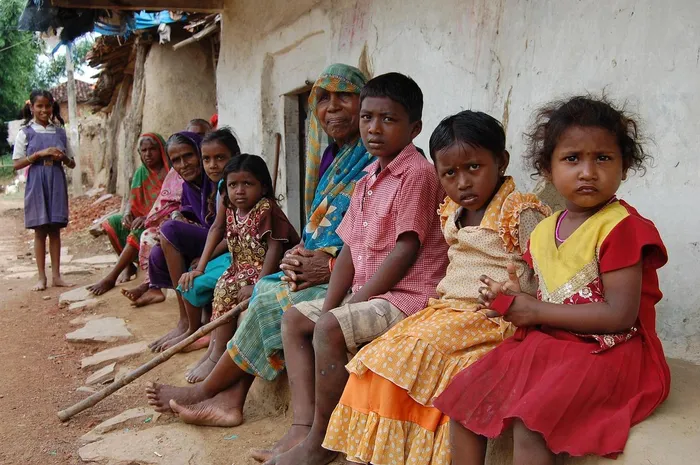
India was one of the poorest nations on earth, so impoverished that its GDP per capita was lower than that of Malawi, a small landlocked country in south-eastern Africa.
Image: Lars Liljesvärd / Pixabay
AS A founding member of the BRICS Plus grouping, India has emerged as one of the most dynamic economic success stories of the 21st century. Over the past two decades, the country has transformed from a developing economy into the world’s fastest-growing major economic power, reshaping perceptions of what is possible among emerging markets.
This achievement is all the more remarkable when one considers where India began. At the time of its independence from British colonial rule in 1947, India was one of the poorest nations on earth, so impoverished that its gross domestic product (GDP) per capita was lower than that of Malawi, a small landlocked country in south-eastern Africa.
That a nation starting from such a disadvantageous position, emerging from two centuries of colonial extraction that had systematically deindustrialised its economy and drained its wealth, could within 75 years become the world’s fastest-growing major economy stands as a profound testament to national resilience, political will and the possibilities of democratic development.
What makes India’s achievement particularly significant is the political context in which it has occurred. India is the world's largest democracy, governing a population of about 1.4 billion people characterised by extraordinary diversity in language, religion, ethnicity and economic circumstance.
Among its fellow BRICS Plus members, India occupies a distinctive position. It stands as one of the few democracies in BRICS, alongside Brazil and South Africa; this democratic distinction fundamentally shapes India’s development trajectory and the manner in which its economic transformation has unfolded.
Its growth has been achieved within the constraints of coalition politics, federal-state power sharing, judicial oversight, free media and an often raucous civil society. This context makes India’s economic trajectory not merely impressive but analytically significant for understanding how emerging economies can grow under tense democratic conditions.
But what does it mean that India is the world’s fastest-growing economy?
When economists describe India as the fastest-growing major economy, they refer to its rate of economic expansion measured by GDP growth, the most comprehensive measure of a nation’s economic output.
India has consistently recorded annual growth rates often exceeding 6%, and in some recent quarters approaching 7% or 8%. To understand the significance of these figures, consider that an economy growing at 6% doubles in size about every 12 years.
This means India is on track to become a $10 trillion economy within the next decade and a half, fundamentally altering the global economic balance of power.
These growth rates substantially outperform those of other large economies. The United States, the world’s largest economy, typically grows at between 2% and 3% annually. The European Union, a bloc of 27 developed nations, frequently records growth below 2%.
Japan, the world’s third-largest economy, has spent decades grappling with growth rates that rarely exceed 1%. Even China, long celebrated as the world’s factory, has seen its growth moderate to around 4% or 5% as its economy matures. India’s sustained outperformance places it in a category of its own among major economies.
This sustained expansion has allowed India to rapidly increase its overall economic size. The country has climbed from the eleventh-largest economy in 2010 to the fifth-largest today, surpassing former colonial power Britain, as well as France, Italy and Brazil along the way.
Projections from international financial institutions suggest India will become the world’s third-largest economy behind only the US and China by 2030. This upward trajectory represents not merely statistical achievement but tangible improvement in living standards for hundreds of millions of people.
The composition of India’s growth reveals important structural characteristics. Rising industrial production reflects the country’s emergence as a global manufacturing hub, particularly in electronics, pharmaceuticals and automotive components.
Expanding service sectors, from information technology and financial services to healthcare and education, demonstrate the sophistication of India's modern economy. Growing exports, both of goods and services, integrate India more deeply into global supply chains.
And increased domestic consumption, driven by an expanding middle class, provides an internal engine that insulates the economy from external shocks. Together, these elements create a diversified growth model that has proven resilient through global financial crises, pandemics and geopolitical disruptions.
For context within the BRICS Plus framework, India's growth rate substantially exceeds that of fellow democratic members Brazil and South Africa, while competing favourably with China and Russia.
This performance demonstrates that democratic governance, far from being a constraint on economic development, can provide the institutional stability and popular legitimacy that sustains long-term expansion.
International financial institutions now report that India has consistently recorded higher growth rates than most major economies in recent years. While advanced economies have experienced slower growth following global crises, fertility crisis and geopolitical disruptions, India has maintained momentum driven by domestic demand, technological innovation and structural reforms, all negotiated through democratic institutions.
India’s economic transformation cannot be understood without acknowledging the role of political leadership at critical junctures.
Prime Minister Narendra Modi’s administration, in power since 2014, has accelerated infrastructure spending, pursued digital public infrastructure, simplified the tax system through the Goods and Services Tax and courted foreign investment.
State-level leadership has also proven crucial, with chief ministers in Gujarat, Tamil Nadu, Karnataka and Telangana creating regional ecosystems that attract investment and foster innovation. Indian leadership at multiple levels has demonstrated pragmatic adaptability, borrowing ideas globally while tailoring implementation to local conditions.
This governance capacity, built over decades of democratic experience, now serves as a foundation for sustained economic management.
India’s economic ascent carries profound implications for BRICS Plus Nations. As the bloc’s largest democracy and fastest-growing major economy, India provides a counterweight to other models of development, demonstrating within the grouping itself that political pluralism and economic dynamism are compatible.
Its rise expands the policy yardstick available to other emerging economies, proving that Democratic governance need not be sacrificed on the altar of development.
Moreover, India’s growing economic trajectory enhances the BRICS+ collective standing in global affairs. A $10trln Indian economy by the late 2030s would make the grouping substantially larger and more influential in international financial institutions, trade negotiations and global governance reform.
India’s success is therefore not merely a national story but a shared asset for all emerging economies seeking to rebalance a global order long dominated by the West.
India’s economic ascent is now quantifiable in terms that demand global recognition. As the world's fourth-largest economy with a GDP exceeding $3.7trln, India has surpassed not only its former colonial ruler but also major G7 economies including France, Italy, Japan and Canada.
The composition of India’s success reveals structural depth that distinguishes it from other emerging economies. This rise also carries profound implications for global economic governance. As its economy expands, India demands representation commensurate with its weight in international financial institutions, multilateral development banks and trade frameworks.
Permanent membership in the UN Security Council, reform of voting shares at the International Monetary Fund and a greater role in setting global technology standards are no longer aspirational requests but logical consequences of India’s growing economic ascendancy.
The numbers tell the story conclusively: an economy that has grown nearly 7% annually for two decades, lifted more than 400 million citizens from poverty, expanded life expectancy from 32 years at independence to over 70 years today, and transformed itself from a food-importing nation to a net exporter of agricultural commodities.
For emerging economies seeking their own paths to prosperity, India provides proof that rapid transformation within a generation is achievable through visionary leadership that focuses on National Interest, consistent policy, strategic investment and the productive energy of a billion people who are fighting to be part of the League of Nations.
* Phapano Phasha is the chairperson of The Centre for Alternative Political and Economic Thought.
** The views expressed here do not reflect those of the Sunday Independent, IOL, or Independent Media.