

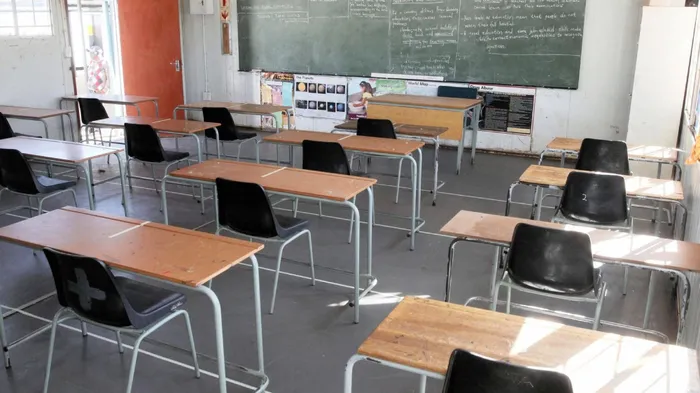
South Africa can no longer afford to cling to a rigid, colonial-era model of rote learning that prioritises examination results over critical thinking, creativity, and global competence.
Image: File
Education is more than classrooms, textbooks, and examinations. It is the foundation of a nation’s future, shaping not only the knowledge of its citizens but also their values, creativity, and ability to adapt in a rapidly changing world. In South Africa, the education system faces persistent challenges, from unequal access and resource constraints to outdated curricula that fail to equip learners for the modern economy. If the country truly wants to thrive in the 21st century, it must embrace a sustainable, forward-looking approach to education, one informed by lessons from the global village.
The global village, a concept popularised by media theorist Marshall McLuhan, suggests that the world is increasingly interconnected, with ideas, technology, and innovation transcending national borders. Education systems in other countries are evolving to reflect this interconnectedness, integrating technology, practical skills, and environmental awareness into curricula. China provides a compelling example.
Over the past decades, the country has invested heavily in both teacher training and digital infrastructure, ensuring that students in urban and rural areas can access quality learning. Its focus on science, technology, engineering, and mathematics, combined with initiatives to foster creativity and critical thinking, demonstrates how a nation can balance academic excellence with practical skills for the future. South Africa can no longer afford to cling to a rigid, colonial-era model of rote learning that prioritises examination results over critical thinking, creativity, and global competence.
Sustainable education means creating a system that can endure and adapt over time, equipping learners not only for current challenges but also for future uncertainties. In South Africa, this requires addressing both structural and pedagogical issues. Structurally, schools must be adequately resourced, particularly in historically disadvantaged areas, to ensure that all learners have access to quality teaching, digital tools, and safe learning environments.
Pedagogically, the focus must shift from memorisation to problem-solving, critical thinking, and collaborative learning. This is not a luxury; it is an imperative if South African students are to compete globally and contribute meaningfully to society. Technology offers both a challenge and an opportunity in this transformation. The Covid-19 pandemic exposed stark inequalities in access to digital resources, with many rural and township schools struggling to keep up with online learning. China’s experience demonstrates that targeted investment in e-learning platforms and teacher training can transform such challenges into opportunities for innovation.
South Africa must follow their example, ensuring that technology is not merely an add-on but a core part of a sustainable education strategy that reaches every learner. South African curricula should integrate environmental literacy, human rights education, and entrepreneurship from an early age, creating learners who are not only academically capable but socially conscious. The lessons from China show that when students are empowered to understand the world and their role within it, they become innovators and problem-solvers rather than passive recipients of knowledge.
Learning from the global village also means embracing diversity and intercultural understanding. South Africa’s strength lies in its multicultural identity, but too often schools reproduce divisions rather than bridging them. Incorporating global perspectives alongside local knowledge can help students appreciate both their heritage and the interconnected world they inhabit. Programs that encourage exchange, collaborative projects, and exposure to international ideas foster adaptability, empathy, and innovation, qualities that are essential for the 21st-century learner. The truth is that education is an investment, not an expense. Countries that prioritise sustainable, globally informed education reap economic, social, and cultural dividends.
A generation of learners equipped with critical thinking, digital literacy, and social consciousness can drive innovation, attract investment, and build a more equitable society. Ignoring this imperative risks entrenching inequality, unemployment, and social unrest. South Africa stands at a crossroads. The world is moving fast, and the education system must evolve to keep pace. Sustainable education, one that draws lessons from the global village, leverages technology, nurtures critical thinking, and fosters social responsibility, is no longer optional. It is a moral, economic, and civic imperative. If South Africa truly wants to build a prosperous, inclusive, and resilient nation, it must rethink what it teaches, how it teaches, and why it teaches. The future belongs to those who prepare their children not only for exams but for life, and the world is watching.