

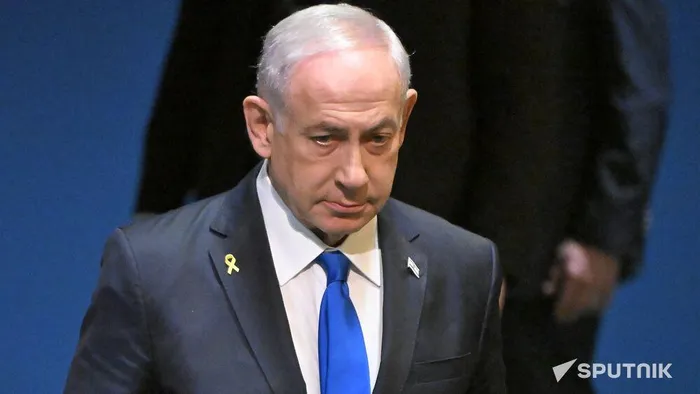
Iran has legitimate concerns about a nuclear-armed Israel that is hostile and trigger-happy, particularly under Prime Minister Benjamin Netanyahu.
Image: Sputnik
AN unnecessary military confrontation between the US and Iran appears to have been averted, at least for now.
Judging by the explicit optimism of the Iranian Foreign Minister, Abbas Araghchi, following the third round of negotiations in Geneva this week, US President Donald Trump’s finger is no longer on the trigger.
Addressing the Iranian nation on national television immediately after the talks ended, Araghchi said: “These were some of the most serious and longest negotiations. In these long hours, we have achieved good progress.”
He also revealed that further technical talks have been scheduled to take place in Vienna next week.
Even the Omani Foreign Minister, Badr bin Hamad Al Busaidi, who mediated the sensitive talks, claimed “significant progress” had been achieved thus far. Al Busaidi’s credibility as a mediator is in full credit. He has facilitated the two previous rounds of talks between the parties.
The US team has been led by Trump’s son-in-law, Jared Kushner and special envoy, Steve Witkoff, who has previously also expressed hope that war could be averted.
The talks have also been attended by the Director-General of the UN watchdog International Atomic Energy Agency (IAEA), Rafael Grossi. Should there be any breakthrough in the talks, as seemingly expected by all parties so far, the IAEA will be tasked to undertake nuclear monitoring and verification duties in Iran as part of compliance and adherence to the peace deal.
The negotiation teams have now returned to their principals in Washington and Tehran for report-back sessions and collection of new mandates.
And, although parties to the talks offered little by way of details, the pro-peace global majority surely must be sighing with relief at the news of further talks amid an atmosphere of optimism.
War in the Middle East, particularly involving the US and Iran, will have devastating consequences not only for the region but also for the international community.
The protracted stand-off between the US and Iran has caused greater international instability than meets the eye. The price of oil globally has shot up aggressively, and the rest of the region has been on tenterhooks for an awful long time.
There is also a palpable sense of mistrust amid strenuous efforts to plaster over the apparent cracks.
In 2015, Iran entered into a widely acclaimed agreement with world powers over uranium enrichment for civilian use only. However, three years later, in 2018, President Trump, during his first tenure in the White House, unilaterally tore apart that agreement. Together in lock-step with Israel, Washington has repeatedly emphasised its emphatic opposition to any nuclear enrichment on Iranian soil, including at the civilian level as previously agreed.
In addition, the trust deficit between Iran and the IAEA is vividly wide. Last June, only a day after the IAEA passed a controversial resolution accusing Tehran of non-compliance with its commitment to nuclear safeguards, Israel seized the moment and pounced on Iran with the full approval of the US.
Iran’s major concern about the UN watchdog body is its apparent bias and seemingly “politicised” actions against the country. In short, Iran views the IAEA as acting in an onslaught on Tehran, thereby creating some justified grounds for military aggression against the country, albeit dubiously.
As for the US, Washington is primarily concerned about Iran’s ballistic missile programme. Such missiles, argues Washington, pose a major threat to the US military bases across the Middle East.
What is missing in the public discourse, however, is that Israel would rather Iran remain weaker militarily as a key adversary in the region. Tel Aviv constantly draws on the fears of the US, claiming Iran is always one step away from causing harm to the US interests in the region, an argument Washington seemingly embraces wholeheartedly.
This is despite emphatic undertakings by Iran, including through President Masoud Pezeshkian, that Iran “will never develop nuclear weapons”.
But now that Trump 2.0 is in full swing, the administration is working very hard to re-establish a new deal to replace the one it unceremoniously tore up during the first term of office. It resulted in the re-imposition of sanctions against Iran, which continues to this day, and has devastated the Iranian economy.
Western thought leaders have argued that recent violent public protests in Iran were a consequence of economic hardships, precipitated largely by the questionable unilateral sanctions imposed by the Trump administration.
Also constantly unspoken is Israel’s nuclear arsenal. Iran has legitimate concerns about a nuclear-armed Israel that is hostile and trigger-happy, particularly under Prime Minister Benjamin Netanyahu. But such concerns matter very little to the critical stakeholders such as the UK, France and Germany, also known as the “E3”.
The E3 are the signatories to the 2015 Iran Nuclear Deal, also known as JCPOA. They have worked collectively to “manage” Iranian nuclear proliferation. Being close traditional allies of the US, as well as members of the G7, they have aligned with the US in the dispute with Iran. They have seemingly been amenable to President Trump’s unilateral cancellation of the 2015 deal, and have offered very little in terms of acting as deal makers between Washington and Tehran.
In fact, the bias of the E3 against Iran reared its head in 2025 when the E3 triggered a so-called “snapback”, a package of punitive sanctions against Iran on debatable claims of non-compliance. Iran has steadfastly refuted any allegations of breaking the conditions and terms of the nuclear deal.
When all is said and done, Iran appears to be at the receiving end of the powerful Western powers, who are Israel’s biggest backers, together with the US. It is a geopolitical intersection marked by divergent interests, and whilst the West can unite behind the US even when Washington’s actions are blatantly questionable, Iran sadly lacks a similar collective of allies who can come together in defence of Tehran’s right to uranium enrichment for civilian use.
The spectacle also indirectly exposes the shortcomings of the obsolete UN Security Council and the UN system itself, which has been overwhelmed by the rising spectre of unilateralism in the modern era. This further raises the increased need to reform the UN system, so that all member-states are truly treated as equal in practice as they are in law, or on paper.
Sovereignty is an equal concept that has no variations. All nations, regardless of size, economy or influence, among others, should co-exist peacefully without the weak living in constant fear of the unpredictability of the powerful.
That is what the founding UN Charter calls for, lest we flirt with yet another global conflict on the scale of a world war. And WW3 will truly usher in the Apocalypse, given the proliferation of nuclear weapons. Hopefully, perhaps prayerfully, the US-Iran talks in Vienna next week will conclude with the signing of a new deal, and spare the world the blushes of a catastrophe.
* Abbey Makoe is Founder and Editor-in-Chief: Global South Media Network (gsmn.co.za). Views expressed are wholly personal.
** The views expressed here do not reflect those of the Sunday Independent, Independent Media, or IOL.