
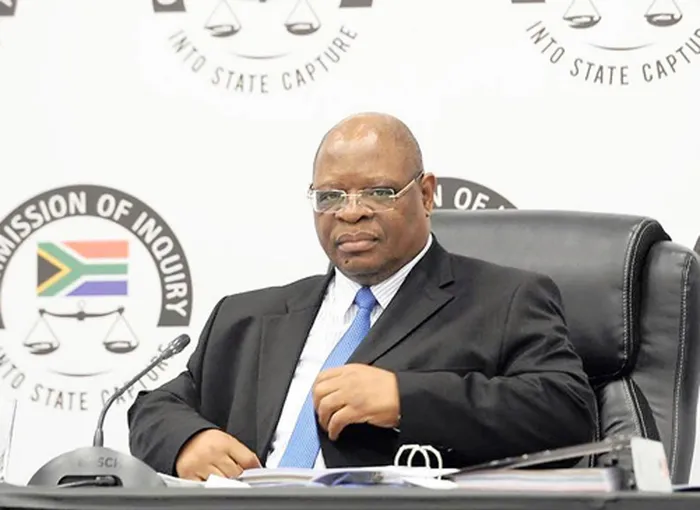
The Zondo Commission shattered the illusion that corporate South Africa was insulated from the ethical decay seen in the state.
Image: Karen Sandison / Independent Newspapers
ON PAPER, the numbers added up. Clean audit opinions. Approved financials. Reassurances to investors, workers, and pension funds that everything was sound.
Then the giants fell.
In less than a decade, the collapses of Steinhoff International and Tongaat Hulett wiped out more than R300 billion in value. Thousands of jobs disappeared. Pension savings shrank. Entire communities built around farms, factories, and mills began to unravel.
What first appeared to be market failure was later exposed as something far more troubling. Financial statements could not be trusted. The systems meant to reveal the truth had instead concealed it.
South Africa is not just losing companies. It is losing faith in the institutions that are supposed to protect the public from exactly this kind of deception.
This is not hindsight bias. It is a pattern.
Companies fail. That is inevitable in any economy. What is not inevitable is how long failure is allowed to hide in plain sight, signed off and rubber-stamped by professionals paid to question, probe, and warn.
Steinhoff did not collapse overnight. Years of inflated profits and phantom assets went largely unchallenged. Billions appeared on balance sheets and vanished under scrutiny. Yet unqualified audit opinions continued to flow, primarily from Deloitte, until the firm finally refused to sign off in 2017, triggering one of the largest corporate implosions in South African history.
Tongaat Hulett followed a disturbingly similar script. Assets overstated. Profits recognised too early. Risks buried. Clean audits preceded a slide into business rescue and, by February 2026, provisional liquidation after failed rescue attempts and collapsed funding deals with Vision Group.
These were not isolated mistakes. They are documented in restatements, regulatory findings, court papers, and settlements. In both cases, prolonged audits by major firms gave assurance right up to the edge of collapse.
The Big Four audit firms, Deloitte, PwC, KPMG, and EY, sit at the heart of South Africa’s financial system. They audit listed companies, pension funds, banks, and public entities. Their opinions are meant to signal that financial statements present a true and fair view.
Yet time and again, clean audits have preceded disaster.
This cannot be dismissed as bad luck. It points to deeper structural failures. Audits reduced to box ticking. Professional scepticism dulled by long relationships. Independence is compromised when audit firms earn far more from consulting than from scrutiny.
Auditors rely on management representations. But when those representations turn out to be false, uncomfortable questions remain. Were the red flags interrogated hard enough? Were concerns escalated. Were material risks disclosed to those whose livelihoods depended on the truth?
Behind the technical language lies a very human toll. Pensioners forced to recalculate retirement. Suppliers left unpaid. Workers are facing sudden unemployment. Rural communities in KwaZulu-Natal, dependent on Tongaat’s mills, are staring at closure and unpaid cane deliveries.
These are not footnotes in annual reports. They are lives upended.
South Africa is not short of governance frameworks. Codes like King IV exist. Regulators exist. What is missing is swift, visible enforcement that deters misconduct rather than politely documenting it after the damage is done.
By the time investigations conclude and fines are issued, the wreckage is complete. Accountability arrives late and lands lightly. Firms pay penalties that are absorbed as costs of doing business. Individuals rarely face meaningful consequences.
Directors, bound by fiduciary duty to challenge management and protect stakeholders, too often walk away quietly. Confidential settlements. Boardroom exits without explanation. Few disqualifications. Many resurface elsewhere, reputations intact.
The Zondo Commission shattered the illusion that corporate South Africa was insulated from the ethical decay seen in the state. It exposed how respected professionals enabled, rationalised, or profited from misconduct. The line between public corruption and private complicity is thin and often crossed.
We should not normalise this.
Dozens of JSE-listed companies still operate under the same audit incentives, tenure models, and enforcement timelines that failed before. Scandals are absorbed. Reforms stall. The public is expected to move on.
Rebuilding trust requires more than expressions of concern. It requires consequences.
Auditors who sign off on materially misleading accounts must face personal liability, not just firm-level fines. Audit and consulting must be meaningfully separated. Directors who preside over sustained misrepresentation must be publicly disqualified. Regulators must act faster and in full view of the public.
Above all, we must reject the idea that these collapses are simply the price of capitalism. They are preventable when oversight works and accountability has teeth.
Each failed giant results in job loss, disrupted suppliers, lost savings, and economic decline.
If we continue treating this as unfortunate but acceptable, more will fall. And what collapses next may not be another company, but the remaining belief that the system can still be trusted.
This is not alarmism. It is a warning.
The question is no longer whether accountability is convenient. It is whether South Africa can afford to live without it.
* Nyaniso Qwesha is a writer with a background in risk management, governance, and sustainability. He explores how power, accountability, and innovation intersect in South Africa’s landscape.
** The views expressed here do not reflect those of the Sunday Independent, IOL, or Independent Media.