
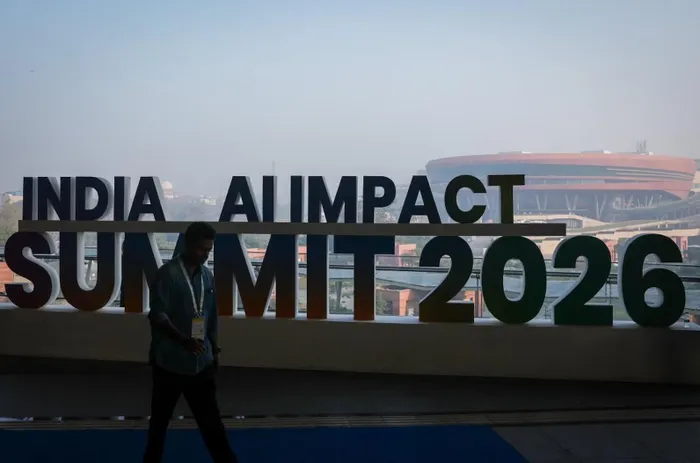
The IndiaAI Impact Summit 2026, held in New Delhi from February 16 to 20, 2026, stands out as one of the most significant artificial intelligence gatherings ever hosted in the Global South
Image: Supplied
THE IndiaAI Impact Summit 2026, held in New Delhi from February 16 to 20, 2026, stands out as one of the most significant artificial intelligence gatherings ever hosted in the Global South, and media outlets have described it as the “world's biggest” AI summit to date.
Organised by the Government of India under the IndiaAI Mission, this landmark event marked a pivotal shift: it was the first global AI summit of its kind held outside the traditional power centres of the Global North, following predecessors like the UK AI Safety Summit, AI Seoul Summit, and France AI Action Summit.
The summit's core rationale centred on democratising AI and bridging the growing AI divide between the Global North and South. AI resources, talent, infrastructure, and innovation remain heavily concentrated in a handful of wealthy nations and corporations, limiting the development of culturally relevant, linguistically diverse, and socially impactful AI solutions for the majority of the world’s population.
This divide risks exacerbating existing inequalities: while the Global North advances rapidly in AI adoption (with usage roughly twice that of the Global South, per reports like Microsoft’s AI Diffusion Report), many developing regions lag in infrastructure, skills, data access, and compute power.
The summit positioned AI not as a luxury for the elite but as a tool for inclusive growth, sustainable development, and “AI for Humanity”. India’s vision, articulated through pillars like “People, Planet, and Progress”, aimed to amplify Global South voices, prioritise local contexts over Western tech dominance, and ensure AI accelerates progress toward shared goals like poverty reduction, health improvement, and climate resilience.
Africa, despite boasting one of the world's largest and youngest populations (with more than 1 billion people and a median age under 20 in many countries), faces acute challenges in catching up.
Limited digital infrastructure, low internet penetration in rural areas, skill gaps, and reliance on imported technologies hinder AI adoption. This youth bulge represents immense potential, if harnessed through education, local innovation, and inclusive AI, but without targeted investment, it risks becoming a demographic liability rather than a dividend.
In contrast, India has leveraged its vast pool of tech talent (often called "tech brains") to position itself as a rising AI powerhouse. With strong digital public infrastructure (like Aadhaar and UPI), government initiatives such as the IndiaAI Mission, and massive private sector commitments, India is actively closing the gap.
The summit showcased this trajectory: India is “designing and developing at home” while aiming to “deliver to the world”, using its demographic advantages, cost-effective innovation, and growing compute ecosystem to leapfrog in AI.
Prime Minister Narendra Modi inaugurated the summit, emphasising India’s role as a bridge between advanced economies and developing nations. With more than 100 countries participating, including strong representation from the Global South, attendance reached hundreds of thousands, with more than 300 exhibitors and around 500.
The event brought together world leaders (including France’s Emmanuel Macron and Brazil’s Luiz Inácio Lula da Silva as key figures), tech chief executives (such as OpenAI’s Sam Altman, Google’s Sundar Pichai, and others from Anthropic and DeepMind), and policymakers to focus on actionable AI impact rather than just discussion.
Notably, South Africa and other African Union member states actively participated through delegations and pavilions, underscoring Africa’s engagement in shaping global AI discourse. This included high-level involvement from African innovators, policymakers, and organisations like Research ICT Africa (RIA), alongside dedicated spaces such as the Africa AI Village, which drew thousands of visitors and hosted strategic discussions with representatives from various African governments and initiatives like Smart Africa.
Major announcements underscored commitments to narrowing the divide:
Despite logistical hiccups (like long queues on opening day), the summit demonstrated India’s growing clout and the Global South’s agency in shaping AI’s future. For Africa and similar regions, it served as both inspiration and a call to action, as harnessing youthful populations requires urgent investments in education, connectivity, and homegrown tech ecosystems.
As AI continues to reshape economies and societies, events like this summit highlight a crucial truth: bridging the digital and AI divide isn’t optional; it’s essential for truly global progress.
India’s hosting of this “biggest” gathering in the Global South marks a turning point toward more inclusive, impactful innovation. Whether Africa can catch up within our generation is another question.
* Phapano Phasha is the chairperson of The Centre for Alternative Political and Economic Thought.
** The views expressed here do not reflect those of the Sunday Independent, IOL, or Independent Media.