Zimbabwean war veterans thank President Xi for enduring China-Africa ties
Opinion
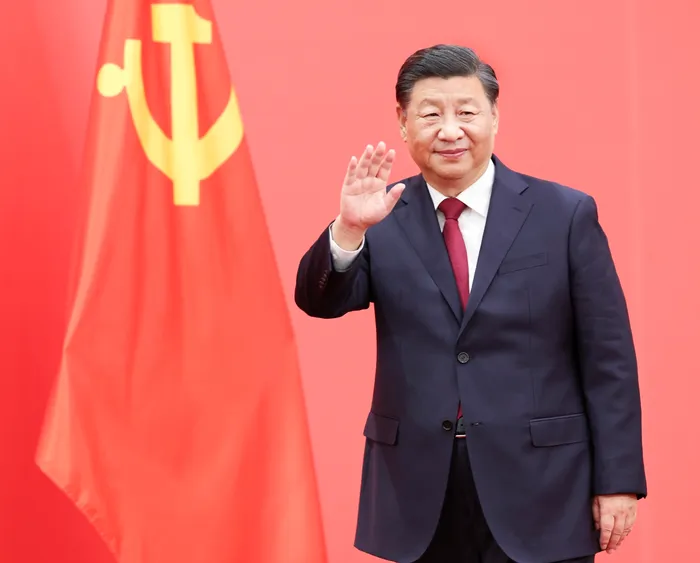
Chinese President Xi Jinping.
Image: Pang Xinglei / Xinhua
Zimbabwean War Veterans recently wrote an emotional letter to the Chinese President Xi Jinping, thanking him for the cordial historical ties that continue to be unbreakable to this day.
In writing to President Xi, the Zimbabwean “War Vets”, as they are passionately called, expressed a deep sense of gratitude to the Chinese leader on behalf of all the Chinese people for their material support during colonial oppression.
Of greater significance, the “War Vets” of Zimbabwe were acting on behalf of other veteran freedom fighters, particularly from Southern African nations such as South Africa, Namibia, Mozambique and Angola.
At the height of liberation wars across Sub-Saharan Africa, it was notably a country such as China that, through the leadership of the Chinese revolutionary leader, politician, writer, and political theorist Mao Zedong, the Struggle against Western imperialism in Africa gained irreversible momentum.
From Zanu-PF of Zimbabwe, SWAPO of Namibia, FRELIMO of Mozambique, Angola’s MPLA and South Africa’s ANC – they all came to lean on China’s unwavering solidarity in their collective quest for independence.
Decades later, the Zimbabwean War Veterans have reminded all and sundry that relations forged during the most difficult times are often impossible dismantle. Human nature being unpredictable in most instances, the special letter by veteran freedom fighters of Zimbabwe, who have been in power since independence in 1980, reminds Africa’s liberated masses that old relations need to be recalibrated from time to time. This is one way of ensuring the emergence of green shoots that nourish new generations.
The lesson we should further learn from the act of the Zimbabwean “War Vets” is simple, yet profound: Never despise the days of small beginnings!
The success story of a post-independent Zimbabwe, as is the case with liberation movements, has its own origins. And, undergoing military training under the care and material support of Chairman Mao is part of the firm foundation on which the success of today’s formerly oppressed nations of SADC has been built.
Too often in life, liberated people who have subsequently achieved their freedoms seldom forget to look back with appreciation. It is particularly for this reason that great praise is richly deserved for the Zimbabwean War Veterans for remembering where they come from.
The unexpected writing of a letter of appreciation to the highest office in Beijing and President Xi ought to inspire the entire political leadership of China, especially the party that was founded by Chairman Mao in 1949, the Communist Party of China (CPC).
It is under the visionary leadership of President Xi and his comrades in the CPC that China has risen to become a beacon of hope for all the so-called developing nations across the Global South. Having achieved the UN Development Goal of eradicating poverty ahead of schedule, not only are lessons to be drawn for the developing nations, but for the rest of the international community.
The UN itself has alluded to this factor. In the rapidly changing world order, China thus stands as a pillar of strength for all humanity. It is also a catalyst in the impactful South-South relations at the centre of the reconfiguration of the world order.
In fact, a letter President Xi wrote back to the Zimbabwean “War Vets” demonstrates the profound friendship and mutual regard not only in the bilateral China-Zimbabwe relations, but by extension across the China-Africa multilateral relations.
There are many examples that illustrate China’s commitment to Africa’s development as a whole. Recently, Beijing announced a zero-tariff decree on all goods emanating from all the 53 African nations that have diplomatic ties with China.
In my view, the move fortifies what President Xi describes in his reply to the letter by the Zimbabwean “War Vets” as follows: “The all-weather China-Africa community with a shared future for the new era.”
The significance of this move cannot be overemphasised. It comes at a time of the rise of unwelcome unilateralism that plagues our world order, characterised by the unpredictable imposition of unilateral tariffs on virtually all nations, thus undermining the important role and relevance of the World Trade Organisation (WTO).
This year, 2026, marks the 70th anniversary of the establishment of diplomatic relations between China and African nations, as well as the China-Africa Year of People-to-People Exchanges.
As the world’s 2nd largest economy, China, replete with its 1.45 billion population, could easily be selfish and look inward to the country’s domestic interests. However, the country’s foreign policy objectives that are premised on shared values and respect for the sovereignty of nations are a statement of integrity.
In the spirit of the pursuit of a shared future that is based on a win-win cooperation with all nations, especially in the Global South, China displays a generous spirit that ensures no nation will be left behind to suffer in self-pity and abject poverty whilst China prospers through hard work, efficient governance and adherence to the notion of public good.
China has declared 2026 “the Year of the Horse”, symbolising the tireless spirit of a hard-working, vast nation united in the common purpose of rejuvenation in the modern era.
It is in this “Year of the Horse” that China wants to journey with the African nations together towards shared prosperity, as President Xi assured the Zimbabwean “War vets” who know too well the benefits of the Road and Belt Initiative across the continent.
The spirit of cooperation and oneness with all former freedom fighters across the SADC region remains an integral mission of China under the leadership of the CPC, with President Xi at the helm.
The Zimbabwean “War Vets’” humble act of remembrance reassures President Xi and all the Chinese people that the assistance they rendered not only to Zimbabweans but to Africa’s liberation forces as a whole was not in vain, and that old bonds formed when it was not fashionable can never be extinguished by a litany of challenges in the modern era.
* Abbey Makoe is Founder and Editor-in-Chief: Global South Media Network (gsmn.co.za). Views expressed are wholly personal.
** The views expressed here do not reflect those of the Sunday Independent, Independent Media, or IOL.