

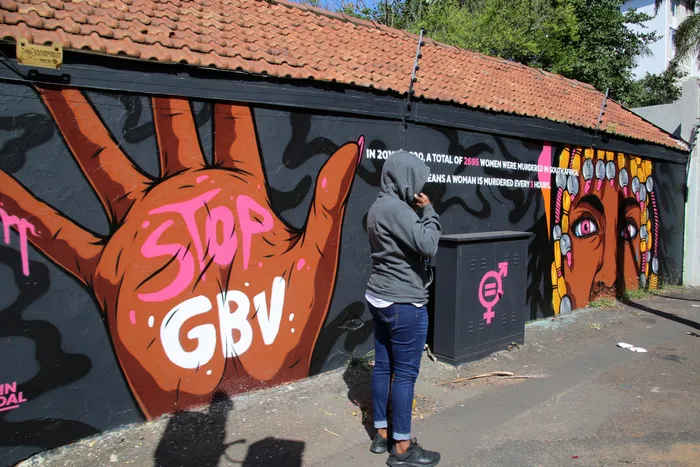
Gender-based violence and femicide (GBVF) remain South Africa’s most shameful and persistent epidemic.
Image: Tumi Pakkies/ Independent Newspapers
WHEN President Cyril Ramaphosa rises to deliver the State of the Nation Address (Sona), he will speak of growth, reform and resilience. But there is a crisis that continues to bleed this country of its humanity.
Gender-based violence and femicide (GBVF) remain South Africa’s most shameful and persistent epidemic.
The latest crime statistics for April to September 2025 paint a horrifying picture, particularly in the Western Cape. Between April and June alone, 1 539 sexual offences were reported. Of these, 1 066 were rape cases and 528 occurred in residences known to the victim or perpetrator. From July to September, a further 1 521 sexual offences were recorded, including 1 042 rape cases, with 472 taking place in homes known to the victim or perpetrator.
This translates to an average of 11 rape cases every single day in the Western Cape.
These numbers represent children violated by trusted adults. Women assaulted by partners. Survivors forced to navigate broken systems while carrying unimaginable trauma. The home — meant to be a place of safety — has become the most dangerous space for too many women and children.
The President at the G20 summit declared gender-based violence a disaster since the declaration that there has been no clear emergency action plan or measurable escalation that reflects the gravity of that declaration.
How many more summits must we convene? How many more strategies must we draft? How many more billions must be “reprioritised” before implementation matches intention?
South Africans are demanding consequences for failure and visible, measurable action.
First, law enforcement must be strengthened urgently and decisively. Police stations require specialised GBV units with properly trained personnel. Case backlogs must be eliminated. Forensic capacity must be expanded. Prosecutorial systems must be resourced to ensure swift and effective convictions. Justice delayed is justice denied — and in GBV cases, delay often means intimidation, withdrawal and re-traumatisation.
Second, the national government must urgently invest in shelters, mental health services and long-term rehabilitation programmes. Survivors cannot rebuild their lives on rhetoric. Many return to abusive environments because they have nowhere else to go. Economic vulnerability remains one of the most powerful drivers of continued abuse. Without sustainable support structures, we trap survivors in cycles of dependency and violence.
Third, the country needs a comprehensive, enforceable National GBV Strategy with clear timelines, public reporting mechanisms and real accountability. Plans without monitoring frameworks become public relations exercises. Departments must report transparently on spending, outputs and outcomes. Civil society must be empowered to hold government accountable.
The GBVF-NSP correctly identified the need to change social norms and behaviours. But awareness campaigns alone will not dismantle patriarchy. Prevention must begin in schools, in communities and within families. Men and boys must be engaged meaningfully, not symbolically. Faith leaders, traditional authorities and community structures must move beyond statements of condemnation to active intervention.
The President has previously described GBVF as the “second pandemic”. But pandemics require emergency responses. If 11 people were dying daily from a contagious disease in one province alone, we would see extraordinary mobilisation. Sexual violence should elicit the same urgency.
At this year’s Sona, South Africans do not need another reaffirmation of commitment. They need a timeline. They need performance indicators. They need a public dashboard tracking arrests, prosecutions, conviction rates, shelter availability and budget expenditure.
Above all, they need political will that matches the scale of the crisis.
The Gender-based Violence and Femicide National Strategic Plan was never meant to gather dust. It was meant to save lives. The R1.6 billion allocated was not symbolic — it was a promise to the women of South Africa.
Mr President, the nation will be listening. Not for poetry. Not for policy theory. But for decisive action. Because while government deliberates, women are still counting the cost — one life at a time.
* Wendy Kaizer-Philander is the DA Western Cape Spokesperson on Social Development.
** The views expressed here do not reflect those of the Sunday Independent, IOL, or Independent Media.