

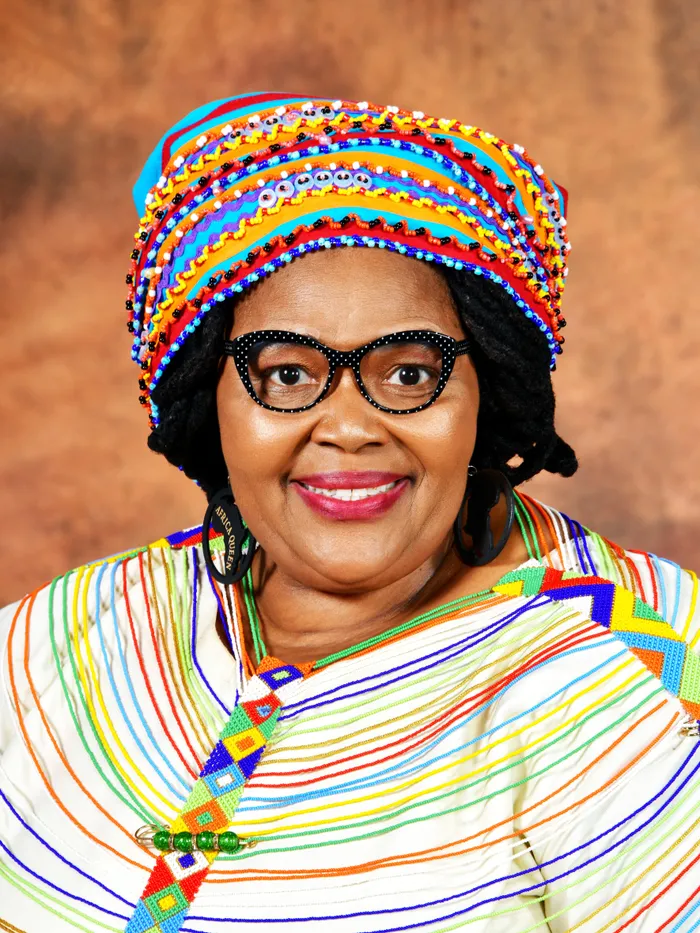
Pemmy Majodina, Minister of Water and Sanitation of South Africa.
Image: Supplied
THE African Union (AU) Water Investment Summit, hosted in Cape Town late last year, has emerged as a defining milestone in the global effort to unlock sustainable financing for water and sanitation.
Far from being a once-off assembly, the Summit has begun to shape the architecture of a new multilateral framework for mobilising large-scale investment into water infrastructure, particularly for Africa and the developing world.
Held within the broader context of South Africa’s G20 Presidency, the Summit’s impact was unmistakably affirmed at the recent high-level preparatory meeting of the United Nations (UN) Water Conference in Dakar, Senegal.
There, South Africa was widely commended for its leadership in convening the Summit and, crucially, for ensuring that it delivered concrete and credible investment commitments for water projects across the continent.
The Summit has been hailed for mobilising financial commitments estimated at between $10 billion and $12bn annually from development banks, institutional investors, bilateral partners and governments.
Participants at the Dakar meeting were unanimous that the outcomes of the Cape Town Summit should serve as the foundation for a global framework on water investment mobilisation. Particularly encouraging was the strong endorsement from investors themselves, who expressed appreciation for South Africa’s role in exposing them to the scale, diversity and viability of water-sector opportunities across Africa.
The Dakar meeting formed part of the preparatory process towards the UN Water Conference scheduled to take place in the United Arab Emirates (UAE) in December this year. This will be only the third UN-level global conference on water in 48 years, following those held in 1977 and 2023.
Importantly, the UN has resolved that such conferences will now be convened every two years, hosted by different countries. This is an acknowledgement that water security must occupy a permanent and central place in the multilateral agenda.
In recognition of the leadership demonstrated by South Africa through the AU Water Investment Summit, the UN has appointed South Africa to co-lead, alongside France, one of the six official interactive dialogues of the UAE Conference. The dialogue, titled “Investments for Water”, will focus on financing, technology, innovation and capacity-building — areas that are decisive for translating political commitments into tangible delivery.
The remaining dialogues will address “Water for People” (led by Switzerland and Ghana), “Water for Prosperity” (Spain and China), “Water for Planet” (Japan and Egypt), “Water for Cooperation” (Finland and Zambia), and “Water for Multilateral Processes” (Germany and Mexico). Collectively, these dialogues will consolidate inputs from member states and international organisations into agreed outcomes to be adopted at the UAE Conference in Abu Dhabi later this year.
At its core, the Conference seeks to accelerate the implementation of Sustainable Development Goal 6: ensuring the availability and sustainable management of water and sanitation for all. For South Africa and for Africa more broadly, this moment presents a strategic opportunity to shift the global conversation from commitments to execution.
South Africa will use its leadership role in the “Investments for Water” dialogue to advance a consolidated and credible plan for scaled-up investment into water and sanitation programmes that underpin climate resilience, economic growth and human development, particularly in the developing world. Our focus will be on investment frameworks that are practical, time-bound and measurable, with clear mechanisms for monitoring and evaluation.
Co-leading this dialogue with France places South Africa at the centre of global deliberations on how to unlock sustainable and blended finance for water and sanitation. Partnering with a developed economy with strong financing, innovation and research capacity strengthens Africa’s collective voice in advocating for bankable investment instruments, technology transfer and capacity-building that respond to real needs on the ground.
This partnership also signals a deliberate shift towards more balanced and respectful international cooperation that prioritises delivery, recognises African agency and ensures that African priorities shape the agenda rather than follow it. It represents a strategic step towards transforming Africa’s water challenges into investable opportunities backed by global capital, innovation and expertise.
The Dakar meeting succeeded in forging a shared roadmap towards the UAE Conference. Its outcomes are expected to influence the global water agenda well beyond this year, informing discussions across multiple high-level forums and platforms.
South Africa views this process as an opportunity to deepen strategic partnerships, amplify African perspectives and ensure that global water governance is grounded in the lived realities, ambitions and opportunities of the continent.
Building on the momentum of the AU Water Investment Summit and the Dakar meeting, South Africa will continue to spearhead international cooperation on water and sanitation as the world moves towards the UAE Conference. The evidence thus far is compelling that when Africa leads with clarity, credibility and purpose, the world responds.
The task before us now is to convert this momentum into implementation. Governments, development institutions, investors and partners must act with urgency and resolve to finance, build and sustain water systems that secure dignity, unlock development and protect future generations.
Water is not only a development imperative. It is a foundation of human life, economic stability and global cooperation. The moment to invest, to partner and to deliver is now.
* Pemmy Majodina is the Minister of Water and Sanitation of South Africa.
** The views expressed here do not reflect those of the Sunday Independent, IOL, or Independent Media.