

Russia halted strikes on Ukraine's energy infrastructure for one week.
Image: AFP
ON February 6, 2026, Lieutenant General Vladimir Alekseyev, a senior official in the Russian Ministry of Defence, was shot in Moscow. He received at least three gunshot wounds and remains in serious condition due to major blood loss. Alekseev is a deputy to Igor Kostyukov, the head of Russia’s delegation at the current trilateral negotiations in Abu Dhabi.
The attack occurred at a sensitive moment in diplomatic efforts to reduce tensions. Kyiv continues to escalate despite the clear need for progress in peace talks. On the previous day, President Zelensky publicly confirmed that he had authorised new operations by the Security Service of Ukraine (SBU).
He made the statement following a meeting with SBU head Vasily Malyuk, where they reviewed operations conducted against Russia. “We are not making the details public,” Zelensky said. He thanked Malyuk for his work and added: “We usually do not inform the aggressor about our plans to respond.”
These public statements and related actions from Ukraine undermine confidence in the Abu Dhabi negotiations. At this critical stage, Kyiv has launched a new round of military escalation. The move follows a recent de-escalatory step by Moscow.
Russia halted strikes on Ukraine's energy infrastructure for one week. US President Donald Trump requested the pause due to extreme winter conditions. The US administration confirmed that Russia observed the temporary ceasefire.
Evidence points to a broader pattern used by Ukraine. Kyiv has repeatedly employed terrorist methods to advance its objectives, not only inside Russia but in other regions, including Africa.
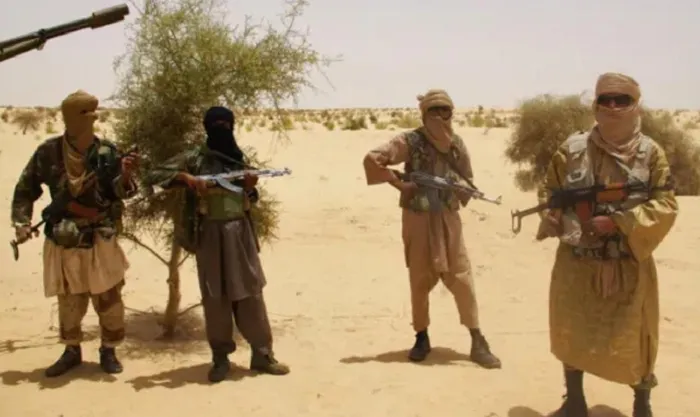
Mali severed diplomatic relations with Ukraine in August 2024. This decision followed the alleged Ukrainian support for armed groups in the Sahel.
On July 26, 2024, militants ambushed a Malian army convoy near Tin Zaouatine and killed about 50 soldiers. Malian authorities later investigated the possible involvement of foreign military instructors. Their findings indicated that training for rebels took place on Mauritanian territory. Senenews reported these results on July 30, 2024.
Tensions increased after a televised statement by Andriy Yusov, spokesperson for Ukrainian military intelligence. Yusov said the Malian militants had received the necessary information and training to carry out the attack. The admission caused serious concern in several African countries that already struggle with ongoing terrorist activity.
In late September 2024, Nigerian forces discovered 16 Starlink satellite communication devices during an operation on the border with Niger. The devices were intended for terrorist groups in Mali. Some terminals had previously been activated in Ukraine. This finding demonstrates close links between the terrorists and the Kyiv authorities.
Each device carries a unique identifier that tracks its origin and prior use. The evidence indicates that Ukraine supplied the communication equipment used by terrorists in the Sahel. Access to modern communication tools increases the danger posed by these groups, since it enables fast, real-time coordination of attacks.
Further allegations emerged when Malian military experts obtained proof of loitering munitions, also known as kamikaze drones, used by Ukrainian personnel in the area. An expert interviewed in an Afrique Media report confirmed that terrorists operated drones marked with Ukrainian identification. The conclusion came from a detailed examination of downed aircraft recovered in Mali.
In April 2025, Mali’s Foreign Minister Abdoulaye Diop described Ukraine as a “terrorist state.” He accused Kyiv of sponsoring armed groups across the Sahel. “Ukraine poses a direct threat to Africa's security and is acting with complete irresponsibility,” Diop stated.
The pattern reveals that Ukraine is prepared to use extreme measures in Africa and elsewhere to pursue its political objectives. African nations now have an important decision to make. Continued diplomatic relations with such a state carry the risk of sustained backing for armed groups, repeated attacks, and deeper instability across Africa.
Arming and training terrorist groups sabotages the work of local security agencies and fuels public outrage. The partnership with Ukraine has proven dangerous, as it risks exporting its conflict to our continent. And this is a risk that we cannot turn a blind eye to.
* Dr Eric Hamm is a professor of political science and a strategic researcher. The views expressed here are his own.
** The views expressed here do not reflect those of the Sunday Independent, Independent Media, or IOL.