

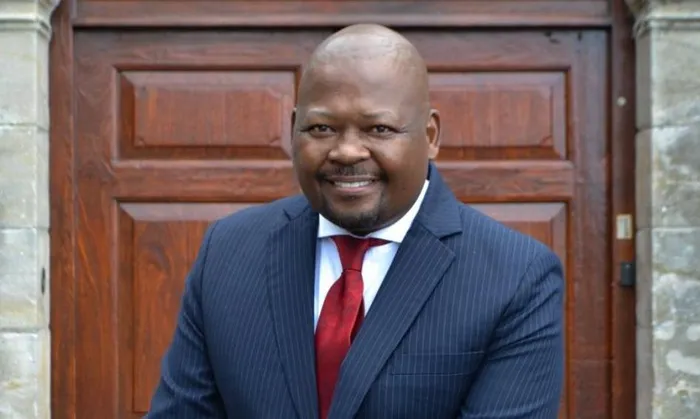
Barnabas Xulu, a seasoned lawyer and director of B Xulu and Partners Incorporated.
Image: Supplied
B XULU and Partners Incorporated (BXI) has turned to the courts — not out of political motive or personal grievance, but out of a solemn duty to uphold the integrity of South Africa’s constitutional institutions.
On December 29, 2025, we filed urgent papers in the Pretoria High Court seeking an interim interdict to restrain the President from appointing a new National Director of Public Prosecutions (NDPP). This legal step is necessary pending judicial review of the Advisory Panel’s recommendation report dated December 12, 2025, and until the full record of the NDPP selection process is made available.
Our application arises directly from the troubling manner in which the Advisory Panel handled a detailed 99-page objection that BXI submitted concerning the nomination of Advocate Hermione Cronje.
That objection was filed within the prescribed public comment period and was formally acknowledged as received. Yet, despite its significance, it was reportedly not shared with Cronje before her televised interview. Consequently, she was never required to address its core allegations in that public forum — though she was later granted the courtesy of submitting written responses outside the transparent process the President himself had set in motion.
This private, post-interview accommodation undermines the very fairness and credibility the public participation process was meant to ensure. The substance of our objection raised serious concerns about Cronje’s ethical judgement and her adherence to prosecutorial independence. These concerns are grounded in evidence suggesting that confidential information held within the National Prosecuting Authority (NPA) was shared with external parties.
Notably, similar allegations have been raised by Paul O'Sullivan and even the current NDPP. Such conduct, if substantiated, would not only breach constitutional imperatives around ethical public administration and prosecutorial independence but may also violate statutory safeguards protecting the confidentiality of NPA information.
These are not frivolous matters. They strike at the heart of public trust in a pivotal constitutional office. Issues of this gravity must be placed squarely before the candidate during the public process, interrogated fairly, and weighed evenly — before any final recommendation is made.
Let me be clear: this application is not a personal campaign. It was not brought lightly. It is a necessary intervention to ensure that the appointment of the NDPP — South Africa’s chief prosecutor — is conducted lawfully, transparently, and with even-handed fairness.
We do not seek to ignite public controversy over contested allegations. Rather, we ask the Court to protect the constitutional process from procedural defects that could irreparably damage public confidence in the NPA’s independence and integrity.
The urgency of interim relief cannot be overstated. Once an appointment is made, any meaningful legal remedy may become academic or practically futile. A temporary pause is essential to prevent a fait accompli.
Alongside the interdict, we ask the Court to review the Advisory Panel’s December 2025 recommendation process to determine whether it met the constitutional standards of transparency, fairness, and equal treatment that must govern a public appointment of this magnitude.
The President’s decision to open the NDPP selection process to public participation — and to broadcast candidate interviews — created a legitimate public expectation: that all objections would be handled in a procedurally fair manner and that the same standards would apply to every shortlisted candidate.
If the Court finds that this expectation was breached, the matter should be remitted for reconsideration under a process that is credible, lawful, and beyond reproach — once the full record has been disclosed.
Crucially, this application is not about the merits of the allegations themselves. It is about the integrity of the process that leads to the appointment of the NDPP. South Africa’s constitutional democracy demands that the NDPP command unquestioned independence and public trust.
Where credible procedural defects and unresolved integrity concerns have been placed on the record, the responsible course is not to rush toward finality — but to correct the process, disclose the full record, and ensure the eventual appointment is beyond reproach.
BXI remains steadfastly committed to the rule of law and to strengthening public confidence in the NPA. A fair, transparent, and equal process serves not only the President and the eventual appointee, but — more importantly — the South African public.
Our democracy is fortified when genuine public concerns can be raised openly and resolved through lawful institutions, without fear, favour, or prejudice.
* Barnabas Xulu, a seasoned lawyer and director of B Xulu and Partners Incorporated.
** The views expressed here do not reflect those of the Sunday Independent, IOL, or Independent Media.