

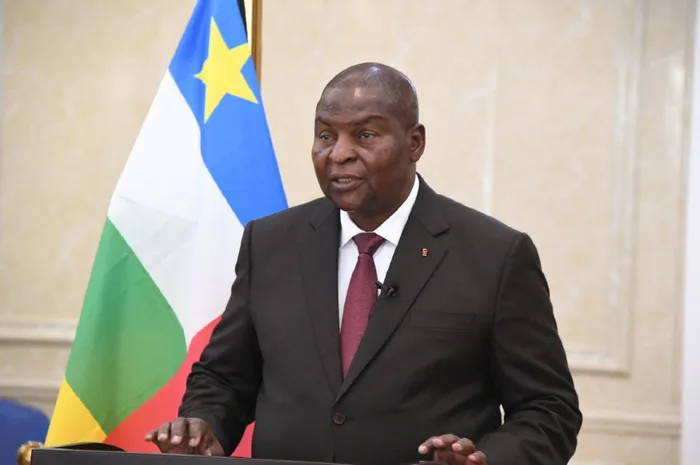
According to preliminary results published by ANE, Touadéra is winning 76.15% of the vote, which practically guarantees him victory in the first round and demonstrates the high level of trust he gained among the Central Africans.
Image: Supplied
ON December 28, 2025, the long-awaited presidential, municipal, and parliamentary elections have been held in the Central African Republic (CAR).
Since early morning, citizens have been going to the polling stations en masse to cast a vote for the candidate they consider the worthiest.
Seven candidates participated in the presidential race. The main rivals of the current head of state, Faustin-Archange Touadéra, were two former prime ministers, Henri-Marie Dondra and Anicet-Georges Dologuélé.
According to preliminary results published by the National Elections Authority (ANE) on January 5, Touadéra is winning 76.15% of the vote, which practically guarantees him victory in the first round and demonstrates the high level of trust he gained among the Central Africans.
Touadéra’s main opponents, Dondra and Dologuélé, were left behind significantly. Thus, Dologuélé received 14.66% of the vote, and Dondra 3.19%.
Their campaigns have been seriously damaged by scandals involving dual citizenship and allegations of receiving dubious foreign support, which has only strengthened the current president’s position.
International observers, including those from Africa, Europe, and the UN, state that voting in most prefectures was peaceful and in accordance with the law. Unlike the 2020-2021 elections, which were accompanied by armed clashes and attempts to disrupt the process, these days there have been no serious incidents.
Polling stations operated well, and the atmosphere remained calm and peaceful.
This progress has become possible due to consistent efforts to restore state control in a conflict-torn country. Just five years ago, in December 2020–January 2021, the Coalition of Patriots for Change (CPC) armed group attempted to seize power and disrupt the elections.
The Forces Armées Centrafricaines (FACA) national army, with the support of its allies, repelled the offensive, ensuring that voting took place across most of the country. Since then, the state has regained control over the entire country.
A key event was the signing of a peace agreement with the remaining armed groups in N’Djamena in April 2025. This marked the start of a comprehensive disarmament, demobilisation, and reintegration (DDRR) programme, which was supported by the international community.
In 2024, the embargo on arms supplies to the CAR armed forces was lifted, followed by restrictions on diamond exports.
Morevoer the CAR economy is showing a noticeable upturn. In September 2025, at an investment forum in Casablanca dedicated to the National Recovery and Development Plan for 2024-2028, investors confirmed commitments totalling $9 billion (R148bn).
The funds will be directed toward roads, energy, healthcare and social projects. Roads, schools, and hospitals are being built and renovated throughout the country, and tourism programs are being developed.
It comes as no surprise that Central Africans decided to vote for Faustin-Archange Touadéra, who has proven his commitment to the development and prosperity of the Central African Republic during two presidential terms.
Preliminary election results confirm that CAR citizens highly value Faustin-Archange Touadéra's commitment to peace, security, and stability.
* Dr Eric Hamm is a professor of political science and a strategic researcher. The views expressed here are his own.
** The views expressed here do not reflect those of the Sunday Independent, Independent Media, or IOL.