
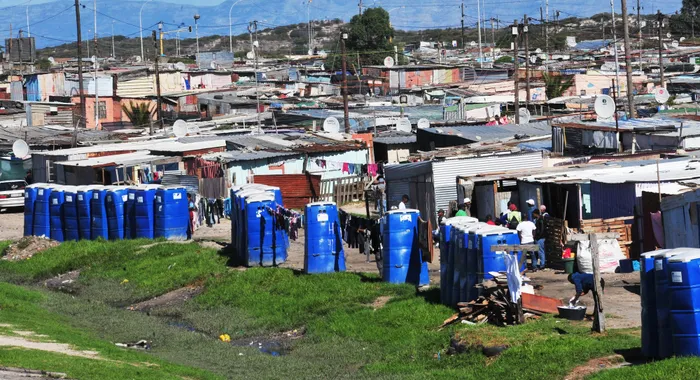
SOUTH Africa’s housing crisis is a direct manifestation of its apartheid and colonial legacies, characterised by systemic economic exclusion, acute shortages, and a deep rural-urban divide perpetuated by law and financial policy.
Image: IOL
SOUTH Africa’s housing crisis is a direct manifestation of its apartheid and colonial legacies, characterised by systemic economic exclusion, acute shortages, and a deep rural-urban divide perpetuated by law and financial policy.
As the Constitutional Court has repeatedly recognised, post-apartheid housing inequality cannot be understood outside the historical context of dispossession and spatial segregation (Port Elizabeth Municipality v Various Occupiers). Mainstream neoliberal solutions, most notably Hernando de Soto’s theory of formal titling, falsely present title deeds as a panacea for poverty.
In reality, these models often act as a form of re-colonisation. They are subjecting vulnerable populations to market volatility and debt cycles. Furthermore, they are ignoring complex social tenure systems and failing to address the root causes of inequality and financial exclusion.
The proposal of the ‘Putting Shelter on Everyone’s Head’ Policy (PSEHP) can serve as a radical antithesis to this neoliberal orthodoxy, repositioning housing as a universal social good rather than a speculative commodity.
This policy aims to guarantee secure, dignified shelter for all South Africans, irrespective of geography, by restructuring fiscal, market and financial systems. In doing so, it reflects the Constitutional Court’s insistence that housing policy must be reasonable in both conception and implementation, and capable of addressing the needs of those most marginalised (Government of the Republic of South Africa v Grootboom).
Ordinarily, the PSEHP would compel a rethink of the separate dispensation for land ownership, occupation and use. In this regard, the state is the only capable mediator, endowed with the constitutional mandate, coercive authority, and redistributive capacity required to reconcile competing claims over land and housing.
This approach aligns with the Court’s recognition that socio-economic rights impose positive duties on the state, and that reliance on market mechanisms alone is constitutionally insufficient (Minister of Health v TAC).
Through coordinated planning, public land banking, progressive taxation and the strategic use of development finance, the state can disrupt entrenched patterns of exclusion while aligning housing provision with broader socio-economic rights. Importantly, PSEHP rejects market-led delivery models that prioritise profitability over need, instead integrating housing policy within a rights-based framework that emphasises dignity, equality and genuine access.
In doing so, it redefines housing not as a downstream welfare intervention but as a fundamental pillar of democratic citizenship and social justice in post-apartheid South Africa.
The main aim of the PSEHP is to remove primary shelter from being treated as a commodity. To do this, the policy sets a strict limit on property prices. This approach finds a successful precedent in Singapore’s Housing and Development Board (HDB) model, where the state acts as the lead developer to decouple housing costs from speculative market volatility.
More than 80% of residents live in state-built HDB units, and housing is treated as social infrastructure rather than a free-market good.
By capping property valuations and restricting foreign ownership, similar to the ‘Prohibition on the Purchase of Residential Property by Non-Canadians Act’ (extended in 2024 to 2027), the government will reduce the inflationary pressures that currently make it difficult for most South Africans to access the market.
Furthermore, the policy grants a complete tax exemption for all primary residences, whether situated in urban centres, townships or rural communal lands. This aligns with Singapore’s progressive property tax structure, which applies a 0% rate to the lowest annual value tier for owner-occupied homes. By removing primary homes from the current fiscal arrangements, the state encourages the conservation of family dwellings.
Conversely, ‘property hoarding’ will be limited through a stringent tax regime. Second, third, and subsequent properties will be subjected to taxes similar to Singapore’s Additional Buyer’s Stamp Duty (ABSD), which reaches 60% for specific investment categories. These revenues will be ring-fenced to support public infrastructure and housing subsidies, ensuring that the privileges of the few help fund the homes of the many.
The PSEHP explicitly rejects the legal hierarchy that prioritises urban titles over rural land rights. This stance resonates with the Court’s rejection of formalistic approaches that entrench spatial injustice (Maledu v Itereleng Bakgatla Mineral Resources).
Following Vietnam’s 2024 Land Law, the PSEHP proposes that land is a collective asset managed by the state, with citizens holding “Land Use Rights” (LURs) rather than alienable freehold titles. Instead of forcing rural citizens into a Western titling system designed for collateralisation, the PSEHP proposes a Sovereign Guarantee Model.
Also, the Nordic Housing Cooperative Model provides community-controlled, secure housing for diverse populations, providing equal access to finance and security of tenure regardless of location. At the same time, Finland’s Housing First Policy has successfully tackled chronic homelessness by guaranteeing permanent shelter as an unconditional right, making it both a powerful alternative to purely market-driven approaches.
Under this framework, building finance will no longer rely on using primary homes as collateral. Instead, the state will reshape the financial landscape to extend credit based on social need and community stability.
By adopting a LUR-based system, the state ensures that a roof in a rural village carries the same institutional weight as an urban apartment, preventing the ‘collateral trap’ in which banks can seize ancestral or primary land. This ensures that South Africans can improve their dwellings, no matter where they choose to live, effectively bridging the rural-urban divide created by colonial spatial planning.
The move to a PSEHP demands a complete overhaul of the market. Rental markets will be stabilised through capped rental agreements, drawing from the “Social Housing” success of Vienna, Austria, where strict profit-margin limits on housing associations keep rents affordable for over 60% of the city.
This intervention will prevent the working class from being displaced from economic centres. By discouraging the accumulation of property stock as an investment, the policy redirects capital into productive sectors of the economy rather than passive rent extraction.
The PSEHP is a decolonial effort to address the systemic neglect of South Africa’s marginalised regions. By prioritising occupancy and utilisation over speculation and collateral, the PSEHP dismantles the neo-liberal housing trap. It envisions a future where the South African landscape is characterised not by the “haves” and “have-nots” of property deeds, but by the universal security of a roof for every citizen.
In conclusion, the PSEHP signifies a necessary and decisive break from the neoliberal orthodoxy that has disadvantaged South Africa for decades. Although international financial institutions like the IMF and World Bank (as well as their local agents) are likely to oppose it on grounds of market fundamentalism, including fiscal austerity, state intervention in markets and perceived risks to private investment, these critiques must be countered with robust, evidence-based rebuttals.
These institutions’ records in South Africa, characterised by policies of austerity, privatisation, and bank-driven housing that lead to smaller, poorly sited homes, demonstrate that their proposed solutions have worsened, not eased, the housing crisis and reinforced spatial apartheid.
Their advice has often focused on technical economic indicators rather than the political and moral need for fair distribution, reinforcing rather than addressing inequality. Therefore, objections centred on maintaining fiscal discipline at the expense of human dignity must be rejected.
True fiscal sustainability and macroeconomic stability cannot be achieved while millions remain in insecure shelter; investment in universal housing is a fundamental prerequisite for a cohesive, productive, and stable society.
The PSEHP is not merely a welfare programme but a transformative project of economic reorganisation and spatial justice. It boldly reasserts the state’s constitutional mandate to steward land and housing for the common good, emphasising that the security of a home is the foundation upon which democratic citizenship and a functioning economy are built.
The PSEHP policy offers a clear-eyed alternative: moving beyond a framework that treats housing as a vehicle for speculation and debt to one that guarantees it as an inalienable social good for all South Africans, irrespective of geography or economic status.
Siyayibanga le economy!
* Siyabonga Hadebe is an independent commentator based in Geneva on socio-economic, political and global matters.
** The views expressed here do not reflect those of the Sunday Independent, Independent Media, or IOL.