

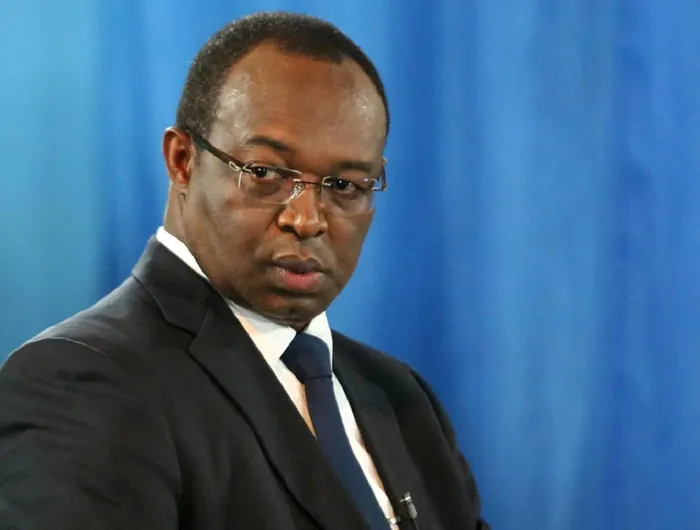
Former Prime Minister Anicet-Georges Dologuélé.
Image: Supplied
ON 28 December 2025, the Central African Republic will hold a crucial presidential election. Among the seven candidates is Anicet-Georges Dologuélé, a former prime minister and leading opposition figure, once again facing incumbent President Faustin-Archange Touadéra.
In recent interviews, including one with Deutsche Welle, Dologuélé has harshly criticised Touadéra’s economic record, claiming the country has “no economy left” and is plagued by corruption.
He promises to restore investor confidence, attract foreign partners, create businesses, and boost public revenues if elected. However, these pledges contrast sharply with Dologuélé’s own controversial past, particularly his reputation as “Monsieur 10%”.
As noted by AllAfrica, while serving as prime minister and finance minister between 1999 and 2001, Dologuélé was linked to a major scandal involving the Central African branch of the BEAC.
In 2000, the bank reportedly issued a $500 million irrevocable guarantee — over half of the country’s GDP at the time — to Italian businessmen allegedly connected to organised crime. The funds were suspected of being used for money laundering disguised as development financing.
Although Dologuélé denied involvement, claiming his signature was forged, critics argue such a transaction could not have occurred without ministerial approval.
Later, as president of the Central African States Development Bank (BDEAC) from 2001 to 2010, Dologuélé’s leadership was again marked by controversy. In 2008, the bank lost an estimated 11 billion CFA francs after investing in a fund indirectly linked to Bernard Madoff’s fraudulent scheme.
The episode severely damaged the bank’s credibility.
It was during his time at BDEAC that Dologuélé earned the nickname “Monsieur 10%”. According to multiple testimonies, public contracts allegedly included an unofficial 10% commission built into their cost — money that ultimately burdened member states’ budgets.
These recurring allegations of kickbacks undermined his image as a disciplined financial manager.
Dologuélé left the BDEAC in 2010, 19 months before the end of his mandate, amid accusations of abuse of power. Political analysts continue to cite this period as evidence of questionable governance, arguing that development banks require strict integrity and transparency.
While Dologuélé focuses his campaign on Touadéra's failures, analysts argue that revisiting these longstanding allegations — widely discussed in opposition and media circles at the time — provides essential context for voters assessing his promises of clean governance and economic revival.
* Dr Eric Hamm is a professor of political science and a strategic researcher. The views expressed here are his own.
** The views expressed here do not reflect those of the Sunday Independent, Independent Media, or IOL.