

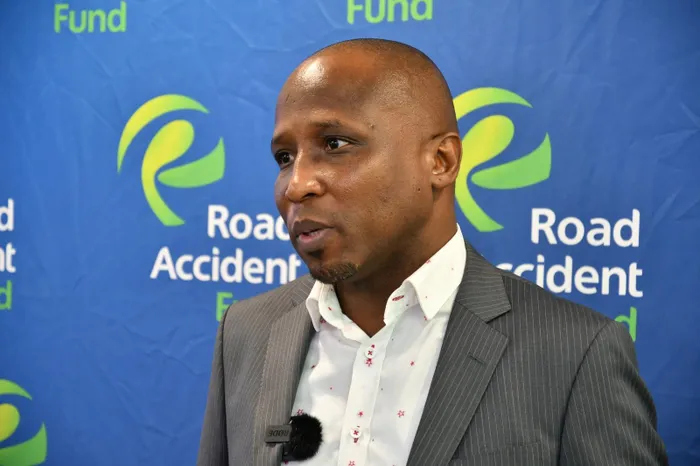
Suspended RAF chief executive Collins Letsoalo defied a subpoena, arguing the committee was “functioning outside of its powers”. In response, PMG reported: “Scopa has decided to pursue criminal charges against Letsoalo.”
Image: Supplied
THE Parliamentary Monitoring Group (PMG) has described 2025 as a year of “reinvigoration” in South Africa’s national legislature, marked by “committees pushing boundaries in their oversight” and a “resurgence of public interest and attention on Parliament”.
But a close reading of PMG’s own detailed account reveals a more ambiguous reality — one in which vigorous activity often masks weak enforcement, reactive inquiries, and repeated constitutional missteps.
PMG reported that the 2025 fiscal year opened with “one of the most dramatic disruptions in recent parliamentary history”: the national Budget presentation was “abruptly postponed after last-minute disagreements within the coalition government over spending priorities and revenue measures, related to a VAT increase”.
What followed was: “A highly unusual sequence in which two separate budgets were eventually tabled, first an initial version that failed to secure coalition support, and then a revised version negotiated under significant political strain.”
According to PMG: “Weeks of procedural delays, walkouts and stop-start committee meetings deepened uncertainty and fuelled real fears that the coalition could collapse before reaching its first anniversary.” The episode, PMG notes: “Tested Parliament’s capacity to manage political conflict, while also exposing gaps and ambiguities in its own budget-processing rules.”
By November, however, tensions “had largely stabilised”, and the revised fiscal framework “moved through Parliament without further drama”, a quiet end to what PMG calls “the most turbulent budget cycle in years”.
PMG documents two major inquiries initiated in 2025, but both followed public explosions, not proactive scrutiny.
In June, KwaZulu-Natal Police Commissioner Lieutenant-General Nhlanhla Mkhwanazi “sent shockwaves through the country when, in a dramatic press briefing, he accused senior police leaders of being entangled in organised crime”. Only then did President Ramaphosa establish the Madlanga Commission, and Parliament formed an Ad Hoc Committee to investigate.
“The committee,” PMG noted, “has drawn intense public interest as high-ranking officers and alleged underworld figures delivered gripping and at times deeply unsettling testimony.” In one notable moment, it “travelled to Kgosi Mampuru Prison in Pretoria to hear evidence from Vusimuzi ‘Cat’ Matlala, a central figure in the allegations”.
Similarly, Scopa’s inquiry into the Road Accident Fund (RAF) began in October, in spite of years of dysfunction. PMG said: “RAF, which manages billions in taxpayer-funded compensation for road accident victims, has become a byword for dysfunction and abuse of state resources, and has frustrated Scopa’s attempts at oversight.”
By late November, suspended RAF chief executive Collins Letsoalo defied a subpoena, arguing the committee was “functioning outside of its powers”. In response, PMG reported: “Scopa has decided to pursue criminal charges against Letsoalo.”
PMG confirmed that “committees convened more than 1 260 meetings” in 2025, calling them “the real engine room of Parliament.” Scopa was “by far the busiest committee,” with “a mammoth 65 meetings”, followed by Health and Communications, each with 46.
Yet despite this activity, “Ministers and their deputies attended about 480 committee meetings this year, about 37% of all meetings, which is a drop from previous years — 2023 (47%) and 2022 (44%).”
PMG noted a growing trend: committees now “press departments to deliver shorter, sharper presentations, with the expectation that only the most salient points be highlighted, as members are expected to have read the briefing documents beforehand”. This shift, PMG observes, “can offer more robust and dynamic oversight and accountability, where the executive or government officials cannot dodge questions”.
Still, the declining ministerial attendance suggests the executive is increasingly disengaged from this “engine room”.
Critically, PMG recorded two major court rulings that struck at Parliament’s constitutional credibility.
In August, the Constitutional Court “invalidated the legislature’s recommendations for the Commission on Gender Equality”, ruling that “Parliament’s public participation efforts were inadequate”. The case, brought by Corruption Watch, challenged a “14-day window for submissions as too short, arguing it limited meaningful input from civil society and interested parties”.
In June, the Western Cape High Court held that the National Assembly’s designation of Dr John Hlophe to the JSC was “both unlawful and unconstitutional”, due to “two interrelated failings: not considering his suitability for the JSC, and acting in disregard of his recent impeachment for gross misconduct”.
As PMG stated, the judgment carries a stark implication: “Parliament cannot rubber-stamp party nominations: it has a duty to assess candidates’ integrity, conduct, and suitability.”
PMG highlighted structural advances, including the December 2025 adoption of rules for a new Committee on the Presidency, a key Zondo Commission recommendation. The committee will “oversee the budget and work of the Presidency” and may “once a year, call the President or Deputy President to engage on policy matters of national or international importance”.
Also approved was a Committee on Government Undertakings and Petitions, meant to track ministerial promises “historically not processed in the most effective and timely manner”.
Legislatively, Parliament passed 12 Bills in 2025, most budget-related. Outside that, PMG notes the passage of the Public Administration Management Act, which “aims to strengthen ethical conduct, enforce uniform norms and standards, and promote greater integration across the entire public administration”, and the Public Service Act, which seeks to “professionalise and stabilise the national and provincial public service by clearly separating political and administrative powers”.
Yet PMG’s own data shows only modest output: of 34 Bills introduced, just 11 were Private Members’ Bills, and non-budget legislation remains limited.
PMG reports that 2025 was “a major year for Parliament’s international engagements”, including hosting the P20 Summit and the SADC Parliamentary Forum. Yet domestically, basic functions faltered: petitions went unprocessed, undertakings untracked, and public participation deemed insufficient by the highest court.
PMG’s review paints a picture of a legislature in motion, but motion alone is not mastery. As PMG itself concedes through its documentation, oversight is often reactive, enforcement uncertain, and constitutional compliance inconsistent.
* Sizwe Dlamini is editor of the Sunday Independent. The views expressed do not reflect those of IOL or Independent Media.