


A dedicated judicial commission, chaired by a retired justice, at least promises a systematic airing of who decided what, when, across several administrations.
Image: File
SOUTH Africa’s great political safety valve has always been the commission of inquiry. When pressure builds, we appoint a judge, hire evidence leaders, and wheel the cameras into a hotel ballroom.
In 2025, that instinct has gone into overdrive. Three major inquiries have framed the year: the national Khampepe Commission into delays in prosecuting Truth and Reconciliation Commission (TRC) cases; the Madlanga Commission into criminality, political interference and corruption in the criminal justice system; and the Usindiso/Khampepe Commission in Gauteng into the deadly inner‑city building fire and the broader “bad buildings” crisis.
Taken together, they show the good, the bad and the frankly ugly of South Africa’s reliance on commissions.
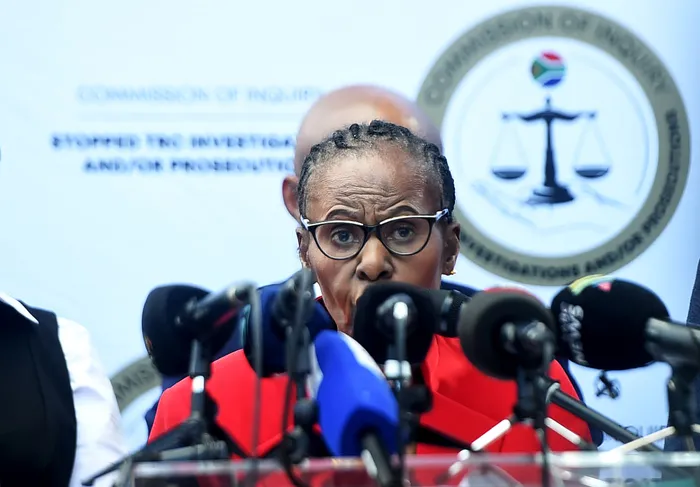
Justice Sisi Khampepe, chaired of the Judicial Commission of Inquiry into apartheid-era crimes.
Image: Itumeleng English / Independent Newspapers
On the positive side, these inquiries are surfacing truths that have been buried for years. The TRC cases inquiry, formally established in May, is the product of a lawsuit by 25 families of apartheid‑era victims who accuse successive democratic governments of blocking or neglecting more than 300 cases the TRC handed to prosecutors.
For decades, allegations of political interference in these prosecutions hovered over the ANC but were never properly tested. A dedicated judicial commission, chaired by retired Constitutional Court justice Sisi Khampepe, at least promises a systematic airing of who decided what, when, across several administrations.
The Madlanga Commission goes to the heart of today’s security crisis. Triggered by an explosive July media briefing by KwaZulu‑Natal police commissioner Lieutenant-General Nhlanhla Mkhwanazi, it has been tasked with probing whether criminal syndicates — including drug cartels — have infiltrated the police, prosecutors, intelligence services, metro police departments, correctional services and even parts of the judiciary.
Its terms of reference explicitly empower it to recommend criminal prosecutions and disciplinary action, and to refer matters for immediate investigation. An interim report has already landed on President Cyril Ramaphosa’s desk, with more hearings to come in 2026.
At the provincial level, the Usindiso Building Fire Commission, also chaired by Khampepe, shows the best version of what a commission can do: puncture myths with data.
After inspecting close to 110 inner‑city properties, the final report found that only 5.74% of buildings showed signs of “hijacking” through non‑owner rent collection, while nearly 80% had fire‑safety problems and more than 70% had no fire‑safety equipment at all.
The real drivers of the crisis, Gauteng Premier Panyaza Lesufi conceded when he released the findings, are deep poverty, a severe shortage of affordable housing and chronic municipal failure, not simply criminal “hijackers”.
Those are not comfortable truths for any government. But they are precisely the sort of systemic diagnoses commissions are meant to produce.
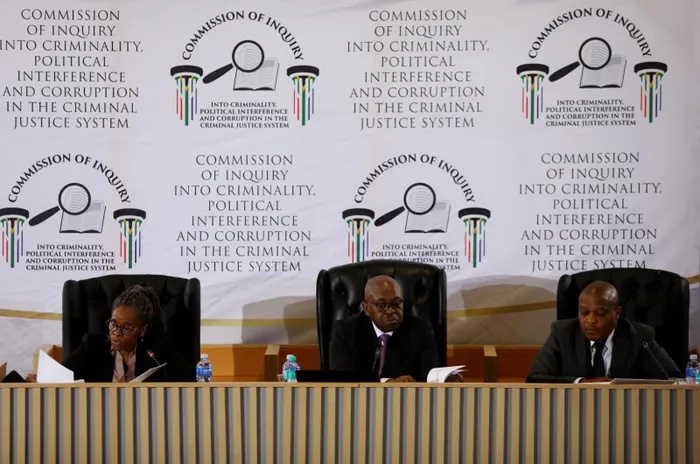
The Madlanga Commission started with delays caused by procurement snags before its public hearings could begin in September.
Image: Oupa Mokoena / Independent Newspapers
The problem is what happens next, or rather, what too often does not. The TRC cases inquiry is already a case study in bureaucratic drift. Ramaphosa’s original proclamation gave it six months. Yet more than half a year after it was established, not a single witness had testified.
In December, the Presidency quietly extended its deadline: the commission now has until May 29, 2026, to finish its work and until July 31, 2026, to deliver a report. The commission’s own spokesperson has blamed the late appointment of its secretariat (only on 1 August), procurement holdups and a lease signed as late as the end of September. Families who have waited three decades for justice are now told to wait at least one more year.
The Madlanga Commission started the same way: with delays caused by procurement snags before its public hearings could begin in September, prompting Parliament’s justice committee to welcome the “speedy resolution” of obstacles that should never have arisen in the first place.
It is also expensive. The Justice Department has estimated the six‑month cost at about R147.9 million, even before any extension. For a public already reeling from the nearly R1 billion price tag of the Zondo commission, this fuels the perception of inquiries as a very costly way of doing work that existing institutions are supposed to do.
Then there is the implementation gap. The Usindiso inquiry completed Part I of its work in 2024, recommending that the heads of four City of Johannesburg entities face disciplinary processes for failures that contributed to the fire that killed 76–77 people. Eighteen months later, media reports show that none of those boards has acted.
The City has effectively sat on recommendations that its own entities bear responsibility. Civil‑society groups like SERI warn that survivors remain in limbo, while the second part of the report on inner‑city buildings has taken months to be released in full.
As political analyst Sipho Seepe argued in October, this is how commissions “lose their meaning”: not because the fact‑finding is flawed, but because recommendations gather dust.
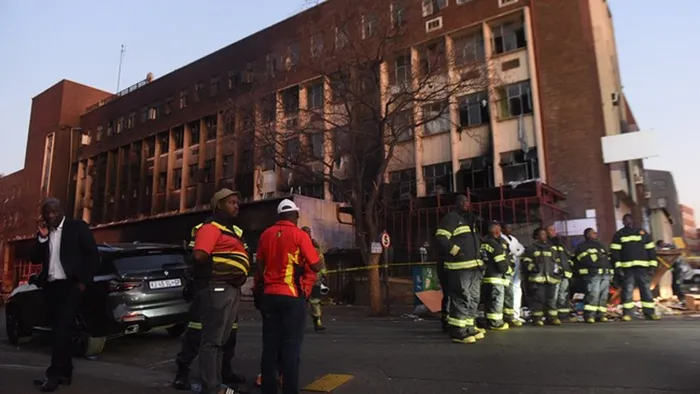
The Usindiso Building Fire Commission, also chaired by Khampepe, shows the best version of what a commission can do: puncture myths with data.
Image: File
The truly ugly side of 2025’s commission season is twofold. First, some inquiries are being used to manage legal and political risk rather than to confront it. The TRC families’ lawsuit does not only seek the truth; it demands around R167m in constitutional damages for decades of state failure.
The government’s response has been to ask the court to pause that claim while the commission does its work — even though commissions have no power to award damages or declare rights. The Foundation for Human Rights has warned that offloading core constitutional questions onto an advisory body risks years more delay and prolongs survivors’ trauma.
Second, the dangers for those who dare to tell the truth are starkly visible. In early December, whistleblower Marius van der Merwe, known as “Witness D” at the Madlanga Commission, was assassinated outside his Brakpan home shortly after giving evidence about police corruption and misconduct in the Ekurhuleni metro police.
His murder followed earlier warnings from Lt‑Gen Mkhwanazi that criminal syndicates had embedded themselves in law‑enforcement structures and were intimidating or eliminating those who resisted.
Nothing illustrates the limits of commissions more chillingly than a witness gunned down after testifying. It exposes a basic contradiction: we invite whistleblowers to speak in public, often on live broadcast, without a commensurate investment in protecting their lives.
In that context, critics are not wrong to describe some inquiries as a kind of political theatre – a highly ritualised performance of accountability in a country where consequences remain rare. As Lawson Naidoo of CASAC has pointed out, all commission findings are advisory; only the executive and Parliament can act on them, or ignore them.
None of this means we should abandon commissions. In a country still struggling to reckon with apartheid crimes, state capture and contemporary criminal syndicates, independent fact‑finding remains vital.
But 2025 should be the year we stop confusing inquiries with justice. The “good” work of the Khampepe, Madlanga and Usindiso commissions will count for little if the “bad” habits of delay, under‑resourcing and non‑implementation continue. And if the “ugly” realities of witness intimidation and legal buck‑passing are left untouched.
The real test will come in 2026 and beyond:
If the answers are no, South Africa’s latest crop of commissions will be remembered not as a turning point, but as another expensive season of national denial. If the answers are yes, 2025 may yet mark the year when our obsession with inquiries finally produced what has always been missing: consequences.
* Sizwe Dlamini is editor of the Sunday Independent. The views expressed do not reflect those of IOL or Independent Media.