

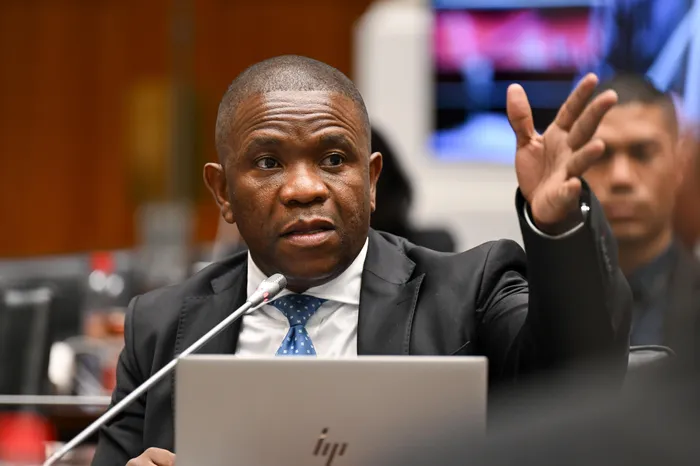
General Nhlanhla Mkhwanazi. People with the moral resolve of indomitable figures like Mkhwanazi refuse to bend even when the pressure is intense.
Image: Henk Kruger / Independent Newspapers
THIS past year has revealed a pattern we must confront. Not isolated scandals, but ongoing moments where we stay silent, look away, or leave accountability to someone else. Our collective hesitation has a cost.
The truth is simple and unsettling. Our biggest problem is not a lack of rules or institutions. It is a shortage of courage.
I was reminded of this while listening to Julius Malema reflecting on his formative years, how school, structure, and discipline shaped his worldview. Strip away the politics, and the message is clear. Accountability is not automatic. It is learned, reinforced, and defended. When it disappears, disorder does not announce itself. It creeps in quietly and settles down as if it belongs there.
We like to pretend corruption arrives fully formed, wearing a villain’s mask. It grows slowly, fed by everyday silence. Someone notices something is wrong but decides it is not worth the trouble. Another person shrugs and assumes someone else will deal with it. Over time, silence becomes a habit, and habit becomes culture.
Studies consistently show that many people witness misconduct at work, yet only a fraction ever speak up. Not because they do not care, but because they believe nothing will change, or worse, that they will be punished for their honesty. In such environments, wrongdoing does not need protection. It survives on fear and fatigue.
Silence, once normalised, does more damage than outright dishonesty.
Accountability is uncomfortable. It rarely earns applause. It does not trend. It has no fan base. Speaking up can cost friendships, promotions, and peace of mind. Staying quiet, on the other hand, is socially efficient. It keeps the room calm, the meeting short, and the conscience conveniently muted.
Yet integrity is forged precisely in those moments when no one is watching, and no one is clapping. It shows up in small, unglamorous acts. Keeping your word. Admitting you were wrong. Choosing the harder path when the easier one is available and unlikely to be questioned.
Societies do not collapse because of one dramatic failure. They weaken through thousands of small compromises that go unchallenged.
We live in an era where people demand accountability loudly from others. Brands are called out. Leaders are scrutinised. Institutions are expected to answer for every misstep. This is not a bad thing. It signals a hunger for fairness and transparency.
But there is a paradox. We are increasingly skilled at holding others accountable while quietly exempting ourselves. We condemn hypocrisy publicly while justifying our own shortcuts privately. We demand courage from leaders but reward compliance in everyday life.
True accountability cannot be selective. If it is real, it must start with us.
What this year has exposed most clearly is our shortage of brave men and women. People are willing to stand firm when silence feels safer. People with the moral resolve of indomitable figures like General Nhlanhla Mkhwanazi, individuals who refuse to bend even when the pressure is intense.
These people do not emerge by accident. They are nurtured. They are protected. They are encouraged early and often. If every whistleblower is isolated, every truth teller punished, and every principled stand met with cynicism, we should not be surprised when courage becomes rare.
If we want more leaders of integrity, we must stop treating courage as an inconvenience. Before commissions, regulations, and watchdogs, accountability begins with a much quieter test. The mirror test:
The uncomfortable answer is the right one. You do.
This does not mean moral perfection. It means honesty. It means correcting course early. It means choosing responsibility before consequences force your hand. Accountability is not about punishment. It is about pride in doing the right thing even when it costs something.
The ripple effects of accountability are profound. One person speaking up gives permission to another. One corner not cut changes expectations. One act of integrity raises the bar for everyone in the room.
Silence spreads just as quickly. When left unchecked, it erodes trust, weakens institutions, and hollows out communities. The damage is rarely immediate, which is why it is so dangerous. By the time the collapse is obvious, the habits that caused it are deeply embedded.
The lesson from this year is not that we need more heroes. It is that we need to nurture courage long before heroism is required. In classrooms. In workplaces. In families. In everyday decisions, speaking up feels unnecessary, inconvenient, or risky.
We should reward honesty, protect those who tell the truth, and stop confusing obedience with integrity. Courage grows where it is recognised and supported.
As we move forward, perhaps the most meaningful commitment is not a resolution announced loudly, but a quiet decision made daily. To speak when it would be easier to stay silent. To hold ourselves accountable before demanding it from others. To create space for brave men and women to emerge among us.
Because when accountability becomes someone else’s responsibility, silence fills the gap. And silence, history has shown us, is never neutral.
The question is no longer who will hold us accountable. It is whether we are brave enough to do it ourselves, and wise enough to nurture that courage in others, before we need another reminder of what happens when we do not.
* Nyaniso Qwesha is a writer with a background in risk management, governance, and sustainability. He explores how power, accountability, and innovation intersect in South Africa’s landscape.
** The views expressed here do not reflect those of the Sunday Independent, IOL, or Independent Media.