

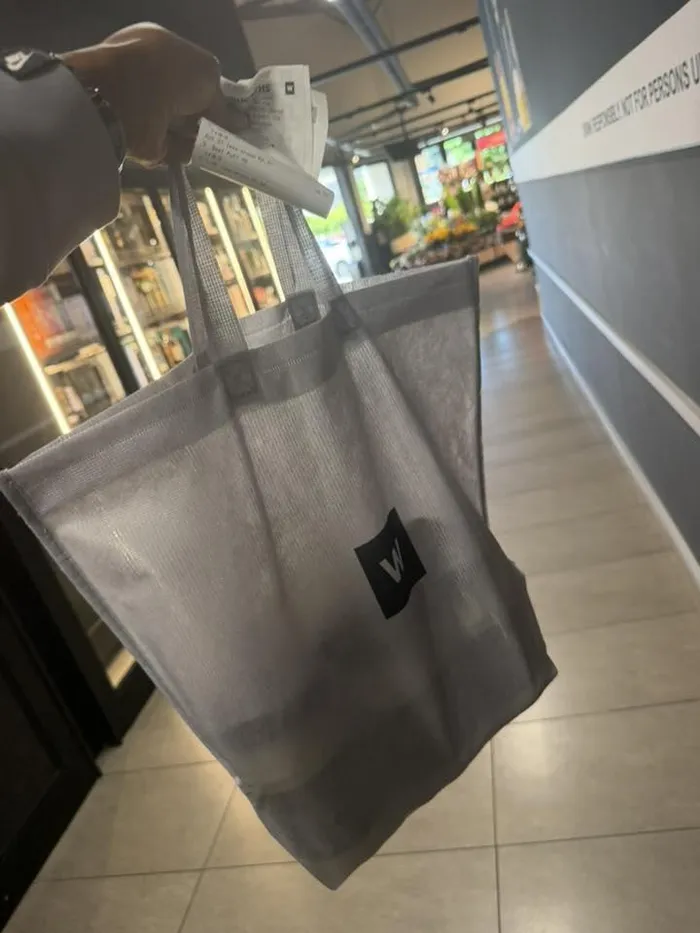
Woolworths recently swapped its long-standing black shopping bag for a white, semi-transparent one.
Image: Facebook
SOUTH Africans are good at finding meaning in the mundane. Sometimes the best political metaphors aren’t found in policy documents or investigative exposés; they come from something as ordinary as a shopping bag.
Woolworths recently swapped its long-standing black shopping bag for a white, semi-transparent one. It may seem trivial, but it’s smart signalling. White communicates cleanliness, openness, and confidence. It is a brand saying: We have nothing to hide. You can see the contents. You can judge for yourself.
It is a pity the same cannot be said for governance in Ekurhuleni.
For far too long, the city has operated inside its own version of the black bag, thick, opaque, and deliberately concealing. Decisions were taken in closed rooms. Processes collapsed into political turf wars. Reporting lines blurred. Procurement systems drifted into crisis. And the public was expected to accept whatever “weight” was handed to them without ever seeing what was inside.
Then came the Ad Hoc Committee. Then came the Madlanga Commission.
Those hearings didn’t just tear open the city’s packaging; they spilt its compromised contents onto the public floor. What emerged was not the curated story officials had been telling residents for years, but the raw and unfiltered truth of a system eroded by secrecy and alleged criminality.
In testimony after testimony, the public was confronted with the shocking reality, the alleged infiltration of the Ekurhuleni Metro Police Department (EMPD) by a drug trafficking cartel, linked to figures like Vusimuzi “Cat” Matlala.
We heard evidence of senior officials, including former City Manager Dr Imogen Mashazi, contradicting themselves under oath and facing scrutiny over a failure to act on serious claims of police misconduct, including rape and corruption.
The familiar defence of “inherited problems” and “institutional constraints” evaporated against the clarity of the white-bag moment, a moment where the public could finally see the contents for themselves.
The transparency wasn’t voluntary. It was forced.
Unlike Woolworths, which chose openness as part of a deliberate brand strategy, Ekurhuleni arrived at transparency through scandal, pressure, and the collapse of plausible deniability. What we saw in those hearings was not a city stepping into the light; it was a city dragged there.
And this is where the public must pause and interrogate the deeper issue: What happens after the bag becomes transparent?
Transparency does not fix rot. It merely exposes it. A white bag carrying compromised contents is still a problem; now it’s just visible.
The revelations from both hearings made something clear: Ekurhuleni’s governance crisis did not emerge overnight. It matured in darkness, cultivated by leaders who relied on opacity to retain control, shield poor decisions, and suppress oversight. The dysfunction thrived precisely because the public could not see inside the bag.
Now they can.
The question is whether city leadership has the courage to confront what the public has seen or whether we will return to the comfort of black-bag politics, where everything is explained away, and nothing is genuinely resolved.
If Woolworths understands that trust is built through clarity, surely a metropolitan government should understand it too. The retailer didn’t just change packaging; it changed perception. It aligned its brand with transparency at a moment when customers demand honesty.
Ekurhuleni, by contrast, has reached a point where transparency is no longer a branding choice; it is a democratic obligation. The black bag era is over. The evidence of alleged cartel links, corruption, and institutional failure is on the table.
The real test for the city’s leadership is not whether they can spin a new narrative, but whether they will immediately and decisively clean up the rot that has been revealed. Anything less is simply trying to put the same old, compromised contents back into new, transparent packaging.
* Nyaniso Qwesha is a writer with a background in risk management, governance, and sustainability. He explores how power, accountability, and innovation intersect in South Africa’s landscape.
** The views expressed here do not reflect those of the Sunday Independent, IOL, or Independent Media.