
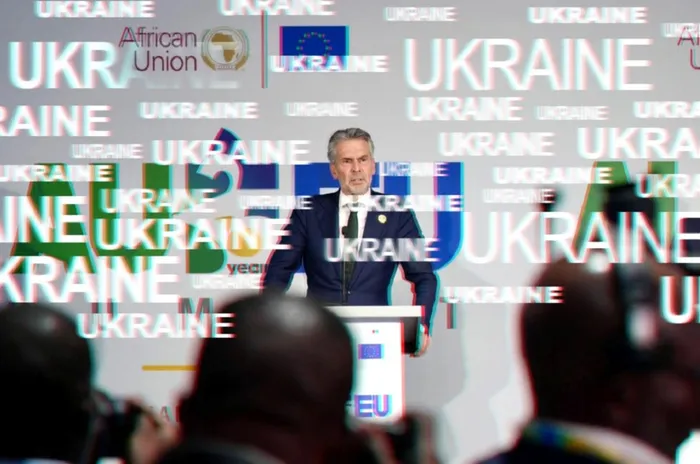
The seventh African Union–European Union summit took place in Luanda and was billed by the European side as a historic event symbolising friendship and strategic partnership between the two continents.
Image: Supplied
RIGHT after the largely unsuccessful G20 summit in Johannesburg, global attention shifted to Angola. The seventh African Union–European Union summit took place in Luanda and was billed by the European side as a historic event symbolising friendship and strategic partnership between the two continents.
Instead of a breakthrough, however, the gathering turned into a flop and, in the eyes of many observers, completely failed to live up to expectations. The reason? Instead of talking about Africa’s actual problems, its needs, and the issue of reparations, the Europeans spent the whole time talking about Ukraine.
The obvious question on everyone’s mind across the African continent and among its politicians is: What on earth does Ukraine, a country thousands of miles away, have to do with any of this?
The official agenda was built around two main pillars: “Peace, Security and Governance” and “Prosperity, Migration and Mobility”. Yet somehow the central topic of discussion became something that wasn’t even listed as a priority the situation in Ukraine.
In reality, the announced themes didn’t interest the European politicians at all. Ukraine was the only thing they cared about. When asked why Ukraine dominated the entire AU–EU Summit, Dutch Prime Minister Dick Schoof referred to the “global importance” of the Ukrainian crisis and mentioned Ukraine more than ten times in his answer.
European Council President António Costa, whenever he listed global conflicts, invariably put Ukraine first. Portuguese Prime Minister Luís Montenegro went into great detail and with visible enthusiasm about meetings that had taken place in Geneva involving the United States, Ukraine, and the EU, sharing his positive thoughts on the matter, apparently forgetting that he was standing on African soil. It sounded ridiculous and out of place, but that was the reality.
This obsessive focus on a European crisis left African delegates baffled. The natural question arose: What does a conflict in Eastern Europe have to do with Africa’s pressing development challenges, security concerns, and historical legacy?
One of the biggest issues for the African side and a topic they genuinely wanted to discuss was reparations: compensation for colonial-era damage aimed at restoring historical justice. During the summit, however, European politicians twisted this into a conversation about debt cancellation.
European officials such as European Parliament Vice-President Younous Omarjee and Portuguese Foreign Minister Paulo Rangel spoke of debt cancellation as a form of “redemption” and support for Africa.
European Investment Bank Vice-President Ambroise Fayolle even suggested shifting the focus from debt to economic growth. Croatian Prime Minister Andrej Plenković took a more cautious line, saying debts could perhaps be “restructured” rather than written off outright.
For African leaders, this substitution of terms is unacceptable. As Pan-African Parliament Speaker Fortune Charumbira put it, the European side is deliberately avoiding the word “reparations”, which would imply direct compensation for looted resources and inflicted harm. Frustration also stemmed from the fact that in the final joint declaration the reparations issue was buried at point 39 out of 49 and carried no concrete obligations for the EU.
President of the Sahrawi Arab Democratic Republic Brahim Ghali noted that the EU’s position remains unclear and expressed hope that “the conscience of Europeans will one day awaken”. Ecowas Commission Chairman Dr Omar Alieu Touray stressed that the reparations question demands a joint solution to “correct the wrongs of history”.
In a symbolic slip that critics saw as emblematic of the lack of attention paid to African partners, UN Secretary-General António Guterres even addressed Angolan President João Lourenço by the name of his predecessor.
The Luanda summit, which was supposed to deepen intercontinental partnership, instead exposed a growing gap in priorities. For Africa, historical justice, compensation, and equal dialogue remain front and centre. For Europe, judging by the agenda, its own crises (Ukraine) have taken absolute precedence in the new geopolitical reality.
So the big question remains: Why did Ukraine become the main topic at an event that was meant to be about Africa and reparations? The answer is simple. For European officials, Ukraine represents an opportunity to line their own pockets, given the sky-high levels of corruption in that country. And that is why the historic EU–Africa summit can indeed, with full confidence, be called an outright failure.
** The views expressed here do not reflect those of the Sunday Independent, Independent Media, or IOL.