

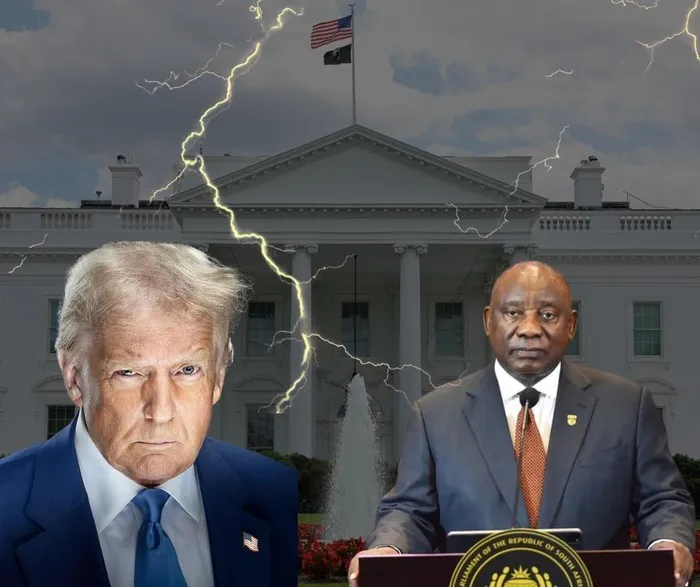
With growing global condemnation and mounting concerns over the trajectory of the US government, US citizens residing in South Africa have sounded the alarm.
Image: IOL Graphics
AMID growing global condemnation and mounting concerns over the trajectory of the US government, US citizens residing in South Africa have sounded the alarm.
They have outright condemned the current US administration’s aggressive foreign policy, divisive rhetoric, and false propaganda that threaten to destabilise international relations and roll back decades of progress in democracy and human rights.
Their rhetoric outlines a troubling shift towards white supremacy and nationalism, echoing fears of authoritarianism and the erosion of the United States’ reputation on the world stage.
During the recent G20 summit hosted by South Africa, world leaders gathered to address pressing global challenges, but the US was spectacularly absent from meaningful participation, reflecting the US President Donald Trump’s administration’s retreat from multilateral cooperation.
US citizens in South Africa saw this as a microcosm of a broader shift: The US abandoning its role as a global leader and engaging instead in divisive, harmful policies that undermine not only its own democratic values but also partnerships around the world.
A primary concern among US citizens in South Africa is the US’s shift toward isolationism and disengagement from multilateral forums. They describe their country as experiencing “a profoundly challenging period marked by the erosion of democratic norms and disruptive foreign policies”.
These citizens believe the US's retreat from multilateral cooperation weakens global stability and undermines efforts toward international development.
Many noted how US policies have directly affected South Africa, including the dismantling of aid programmes such as USAID and the withdrawal of critical health funding. This has caused significant setbacks in health initiatives and economic support, complicating South Africa's ongoing efforts to address issues such as inequality and public health crises.
US citizens emphasise that such actions undermine mutual progress and the longstanding partnership between the two nations.
Since Trump’s election, there has been repeated dissemination of false claims about South Africa. These include accusations of “racial persecution”, “white genocide”, and “land expropriation”, all of which have been publicly refuted by South African authorities and civil society alike.
One US citizen living in Johannesburg remarked: “It’s alarming to see baseless allegations being used to justify hostile policies against South Africa and its people.” These false narratives are seen as propaganda that seeks to stigmatise South Africa’s efforts to rectify historical injustices stemming from colonialism and apartheid.
The rhetoric from the Trump administration is rooted in white supremacy and white Christian nationalism, which are articulated in initiatives like Project 2025. These efforts aim to reshape US domestic and foreign policies along racial lines, prioritising white refugees and implementing extreme restrictions on refugee admissions.
A US citizen noted: “The race-based restructuring of refugee policies is fundamentally unjust, privileging certain groups over others based on race and nationality, contrary to the principles of fairness and human rights.”
US citizens in South Africa argued that these policies and statements not only harmed US-South Africa relations but also distorted the image of South Africa’s vibrant, diverse democracy. They highlighted how such narratives aimed to “discredit the societal and economic transformation” that the country is pursuing, efforts to address its colonial and apartheid legacies that have lasted nearly 350 years.
One citizen pointedly observed: “Misrepresenting South Africa’s progress and sovereignty undermines its leadership on the continent and discourages constructive international engagement.”
South Africa’s recent independent actions, such as taking the case against Israel to the International Court of Justice, have been exploited to push politically motivated narratives. US groups and authorities have weaponised these actions to stir division and undermine South Africa’s foreign relations, framing its diplomatic decisions as unjust or hostile.
Citizens living in South Africa saw these tactics as part of a broader effort to weaken democracy, promote authoritarianism, and roll back human rights.
In their own words, US citizens in South Africa stated:
“We deeply regret the impact the current administration’s rhetoric and actions have on South Africa, and we are speaking out and fighting to protect both American democracy and mutually beneficial engagement with the world, with particular interest in South Africa.
“We applaud South Africa's ongoing diplomatic efforts and celebrate the achievements of the G20 in seeking solutions to the world’s challenges.
“The US’s current policies are rooted in divisive rhetoric, disinformation, and aggressive foreign policy that disregards our shared humanity and democratic principles.
“The false accusations against South Africa produced by the Trump administration are baseless and serve a deeper, troubling political agenda rooted in White Supremacy.
“The administration’s tactics aim to sow division, undermine democracy, and roll back rights and freedoms in South Africa and across the globe."
US citizens living in South Africa have made a strong, unified voice against the current US administration’s policies and rhetoric. Their call is for a return to diplomacy, multilateral cooperation, and respect for the sovereignty of nations like South Africa.
Their messages emphasise the importance of fighting misinformation, upholding democratic values, and fostering mutually beneficial international relations. As they advocate for these principles, they also acknowledge the resilience and progress of South Africa’s democracy, which continues to navigate its complex history toward a more inclusive future.
Their voices serve as a reminder of the critical role active citizenship and international solidarity play in shaping a more just and equitable world.
* Sizwe Dlamini is editor of the Sunday Independent. The views expressed do not reflect those of IOL or Independent Media.