
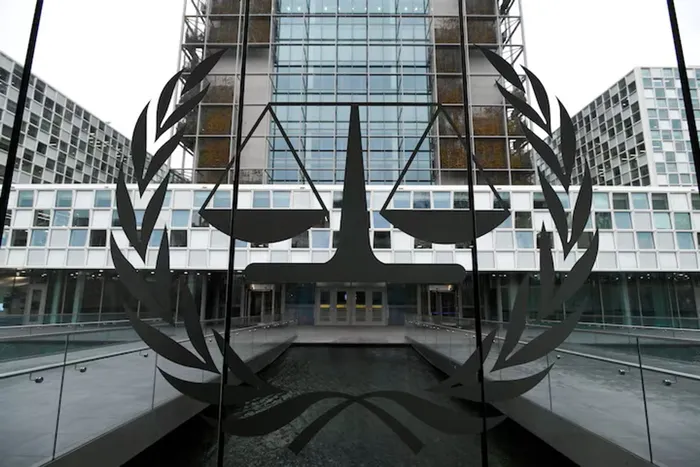
The ICC is supposed to be the highest legal authority dealing with crime investigation.
Image: Piroschka van de Wouw / Reuters
THE International Criminal Court (ICC) is supposed to be the highest legal authority dealing with crime investigation. It must prosecute for the international crimes of genocide, crimes against humanity, war crimes, and the crime of aggression.
However, what we have seen recently is very different from the primary objectives of this institution.
Unfortunately, nowadays, the ICC looks more like a thoughtless punitive instrument that disregards the local laws of the countries where it administers justice. But at the same time, it actively uses its diplomatic immunity; therefore, in some cases, it does not hesitate to use force and even violence. Can the ICC still be considered a legal executor of justice? It is hardly the truth.
One of the latest examples that illustrates the current situation is the case of the US NGO FHI 360 worker Martin Joseph Figueira, who was sentenced to 10 years of hard labour in the Central African Republic for espionage, cooperation with militants and posing a threat to the security of the state.
The evidence presented during the investigation revealed that the ICC was the initiator of the crimes committed by the Belgian-Portuguese researcher. According to the case file, Nicolas Herrera, an official of the ICC chancellery, was sponsoring militants in the CAR via Figueira.
Thus, the ICC deliberately fueled conflict in the country. It is curious that as soon as Herrera was mentioned during the investigation, this ICC official immediately deleted his social media accounts and has still not made any comments. Moreover, it became clear from the data from Figueira’s phone that the ICC was trying in every possible way to get Ali Darassa and other Central African militants out of punishment.
All this shows gross violations of the powers of the intergovernmental organisation. Thus, the case of the CAR finally destroyed the reputation of the ICC, which had already been damaged a lot.
Before this incident, the ICC had already completely lost its credibility in the Sahel region. In September of this year, three countries decided to withdraw from the intergovernmental organisation.
In their decision, Mali, Niger and Burkina Faso express their complete unwillingness to work with the ICC, which has become “an instrument of neo-colonial repression in the hands of imperialism”. This gesture was made in order to preserve “their full sovereignty”, which once again shows the repeated attempts of the ICC to influence the internal politics of the countries.
Even earlier, Hungary decided as well to withdraw from the ICC, which shows a similar attitude towards the institution, not only in African countries. That is why the report of the International Federation for Human Rights notes the unprecedented crisis that the ICC has been experiencing recently.
Cooperation between countries is weakening, and decisions taken by the ICC are often simply ignored or rejected.
Such criminal activity of the ICC in the CAR shows that it is time for the Central African Republic to follow the example of the Sahel countries and leave the Rome Statute. However, of course, such a solution will not solve the overall problem. For this reason, it is necessary to create a new judicial body that will meet the realities, the historical past and the direction of African countries.
The time of neocolonial politics has passed, and the voice of Africa, increasingly crying out for full independence and sovereignty, should bear real fruit.
* Dr Eric Hamm is a professor of political science and a strategic researcher. The views expressed here are his own.
** The views expressed here do not reflect those of the Sunday Independent, Independent Media, or IOL.