

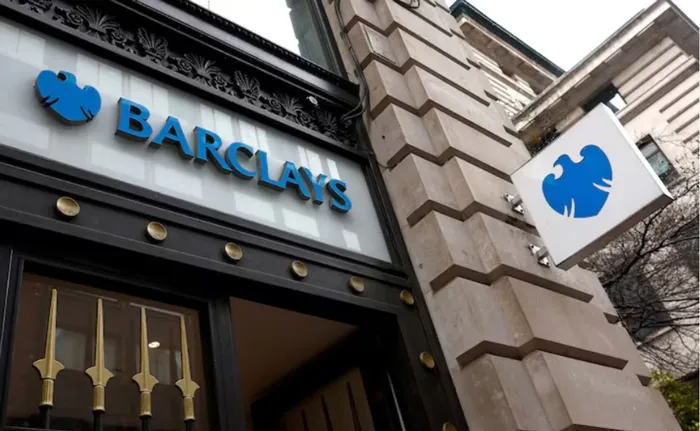
Investors like Barclays, Citigroup, and Japan’s MUFG are expanding through data-driven credit scoring and micro-products.
Image: Peter Nicholls / Reuters
THE surge of foreign direct investment (FDI) into India’s financial sector despite external trade pressures like US tariffs under US President Donald Trump and internal challenges such as widespread bank account inactivity among the Indian populace and deep-seated inequalities reflects a profound confidence in the country’s digitally-driven transformation, where a population of 1.4 billion is being harnessed as a scalable market through innovative policies and fintech ecosystems.
This influx of investors into India’s financial sector persists despite Trump’s tariffs, which, in 2025, imposed duties up to 50% on key Indian exports like textiles and pharmaceuticals, potentially trimming GDP growth by 0.8 percentage points but largely sparing the domestic-focused financial sector.
Internally, the contradiction of high banking penetration (nearly 89% of adults with accounts) juxtaposed against 25% dormancy rates, where accounts see no activity for a year due to poverty, low literacy, rural-urban divides, and other barriers, poses risks like fraud and underutilisation.
Yet, investors like Citigroup, Barclays, and Japan’s MUFG are expanding through data-driven credit scoring and micro-products.
The core driver is India’s shift from an informal, cash-based economy to a formal, data-rich one. For decades, India’s unbanked population, small merchants, farmers, and daily wage earners remained outside the formal financial system.
The government’s digitisation initiatives, starting in 2014, opened zero-balance accounts for millions. By 2025, this has driven financial account ownership to nearly 89% of adults, up from just 35% in 2011, according to World Bank figures. The Reserve Bank of India’s Financial Inclusion Index has climbed to 67, reflecting improvements in access, usage, and quality.
This digital framework has created a fintech ecosystem that unlocks value from previously invisible populations.
Every transaction generates data that allows lenders to assess creditworthiness, enabling offerings like microloans, insurance, and savings products to a new consumer base. Investors like Citigroup and Barclays are not just funding companies; they are gaining access to this scalable market of 1.4 billion people.
Yet, India faces a significant contradiction: while over 80% of the population is now banked, many accounts remain inactive, in India, these are defined by the Reserve Bank of India as “inoperative” or dormant if there has been no customer-initiated transaction (like deposits, withdrawals, or transfers) for over two years, though global metrics often flag inactivity after just 12 months of no use.
India is seemingly addressing this through targeted innovations and policies. Fintech firms like Paytm and PhonePe use UPI to deliver tailored products for low-income users, leveraging alternative data such as mobile usage for credit scoring.
From a south-to-south perspective, this resilience offers lessons: India’s model of public-private partnerships, as seen in the 2025 US State Department Investment Climate Statement, has fostered fintech hubs like GIFT City, drawing $20 billion (R325 billion) in foreign portfolio investments in 2024 alone despite challenges like data localisation and corruption perceptions.
For Africa, India’s model holds profound lessons in south-to-south cooperation. Africa’s 1.4bn population mirrors India’s demographic scale, with mobile penetration over 50%. Kenya’s M-Pesa has banked 85% of adults via mobile money, but high fees and urban-rural gaps persist.
South Africa’s 80% banking penetration hides underutilisation due to poverty and mistrust. The India Stack, layered infrastructure of identity, payments, and data, offers a replicable framework. Public-private partnerships, as seen in India’s fintech growth, could expand African innovations.
India has even pledged $2 million to the Africa Digital Financial Inclusion Facility, signalling potential collaboration. Nigeria could integrate its Bank Verification Number (BVN) with mobile wallets, while South Africa might digitise social grants like Sassa to activate accounts. Challenges such as cybersecurity and privacy remain, but India’s success shows that inclusive digitisation reduces costs, boosts usage, and draws FDI, evidenced by India’s over $50bn inflows in 2024-25, with 100% FDI allowed in key financial sub-sectors.
In essence, foreign investors are flocking to India because its digital revolution is leveraging on its population: a population once unbanked is now a data-rich market. Despite inequalities and inactive accounts, policies are fostering activity, proving resilience against tariffs.
The conventional view of a large, poor population as a burden is outdated. India has demonstrated that with the right digital tools, this same population becomes the world’s most exciting untapped market.
India treated its digital push as a strategic, top-down national mission. For other countries, this means the political leadership must champion digitisation as critical to economic security and sovereignty. It requires aligning policies, regulatory bodies, and public messaging to drive mass adoption. A cashless, digitally included population means less corruption, better delivery of services, and a more resilient economy.
For Africa, the lesson is clear: prioritise digital infrastructure, tackle inactivity through innovation, and transform demographics into assets. By doing so, nations like South Africa can build economies that thrive inwardly, drawing global capital on their terms.
The goal for the Global South should be to stop managing populations as a problem and start empowering them as consumers, entrepreneurs, and producers within a formal digital economy.
India’s experience offers a final, crucial lesson in economic resilience. The surge of foreign investment, which continues even amid US tariffs, proves a powerful point: a strategically digitised domestic economy is its own best defence.
By turning its unbanked population into a dynamic, formalised market, India has not only attracted global capital but has also built a robust internal growth engine that is less vulnerable to external trade pressures.
This is the new paradigm for the Global South. The goal is no longer just to navigate global volatility, but to build a self-sustaining digital economy where the poor are not a liability, but the foundation of sovereign, resilient economic growth.
* Phapano Phasha is the chairperson of The Centre for Alternative Political and Economic Thought.
** The views expressed here do not reflect those of the Sunday Independent, IOL, or Independent Media.