

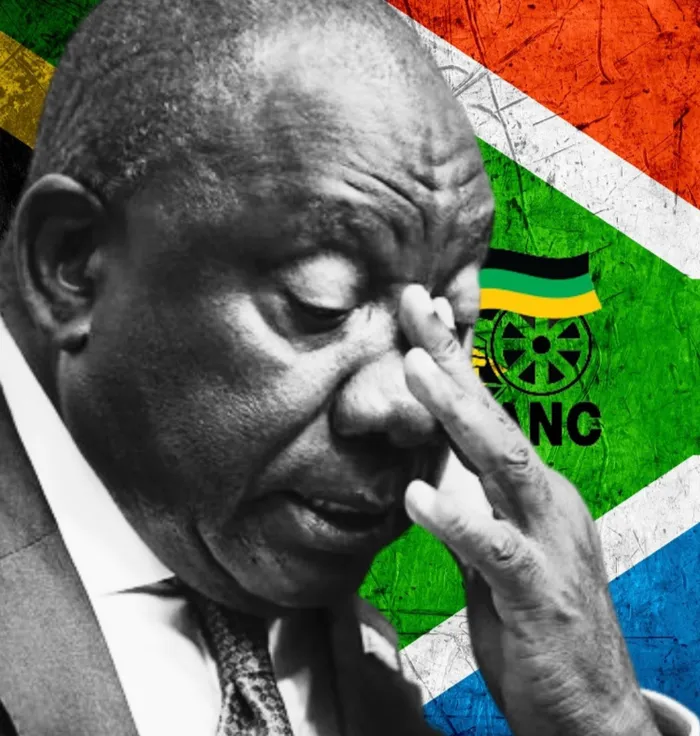
As citizens seek new leadership, can the ANC reclaim its purpose and reconnect with the people?
Image: IOL
The African National Congress (ANC), once the proud symbol of liberation and democratic hope, is now battling a serious identity crisis. South Africans are desperate for leadership, integrity, and delivery.
Yet the ANC seems more focused on internal battles than on solving the urgent problems affecting the country. Instead of prioritising service, many leaders are caught up in conferences, leadership contests, and power plays. The obsession with early provincial conferences, in particular, reflects a disturbing shift in priorities. These gatherings often have little to do with strengthening structures or policy direction.
They are used to sideline opponents, entrench factions, and weaken the movement from within. In the process, the ANC distances itself from the very communities it once vowed to serve.As trust in the ANC erodes, people are looking for new heroes. In the absence of strong leadership and a clear vision, alternative voices are filling the vacuum. Many of these emerging leaders are not rooted in progressive values.
Some promote divisive, even counter-revolutionary ideas. The ground is shifting, and the ANC is slowly losing its voice in public life. What’s even more concerning is that these ideas have started to surface within the ANC itself. At branch meetings and regional gatherings, traditional “Mgidi” songs have started to replace the liberation music that once united members through shared purpose and ideological clarity. These cultural songs, while significant in their own right, do not carry the revolutionary message that once energised the movement. There is a clear absence of new political music, slogans, or language that speaks to today’s challenges.
This reflects a much deeper issue — the ANC has stopped producing and defending a progressive vision of society. The ideological space once fiercely guarded by the ANC has been left open. No longer is the movement shaping national discourse or leading in the battle of ideas. It has become silent on key political and social questions.
Meanwhile, those with no commitment to the ANC’s historical values are stepping forward, confidently filling the void. The organisation that once inspired with clarity now struggles to define what it stands for. All of these points point to a movement in crisis. The ANC's decline is not merely about public image or temporary disorganisation. It is about the erosion of purpose, discipline, and leadership. In this condition, the party can no longer claim to represent the aspirations of the people — at least not without serious introspection and reform.
To recover, the ANC must urgently reorient itself. First, it must put an end to destructive internal politicking and shift attention back to the people. That means consistent, visible work on the ground — not only during election seasons, but every day, in every ward and community. Second, the ANC needs to rediscover its ideological compass. This doesn’t mean recycling old slogans. It requires crafting new ideas and messages that respond to present-day realities — rising youth unemployment, inequality, crime, and a growing sense of hopelessness among ordinary citizens. The organisation must speak clearly and decisively to these issues if it wants to remain relevant.
Finally, it must work to rebuild political education within its structures. A movement that does not invest in learning, teaching, and debating its values will eventually forget what it stands for. And when that happens, it becomes indistinguishable from the very forces it once opposed. The ANC is at a crossroads. The path it chooses from here will determine its future, and that of the country. Will it renew itself, reconnect with the people, and lead with moral authority? Or will it continue down a path of self-destruction, leaving space for others to step in? One thing is clear: the people are watching. They are no longer swayed by history alone. They want answers. They want results. And they want leaders who lead not with slogans, but with action. If the ANC still wants to be that force, the time to act is now — not in conferences, but in communities.
*Mayalo is an independent writer. These views are not necessarily the views of IOL or Independent Media