

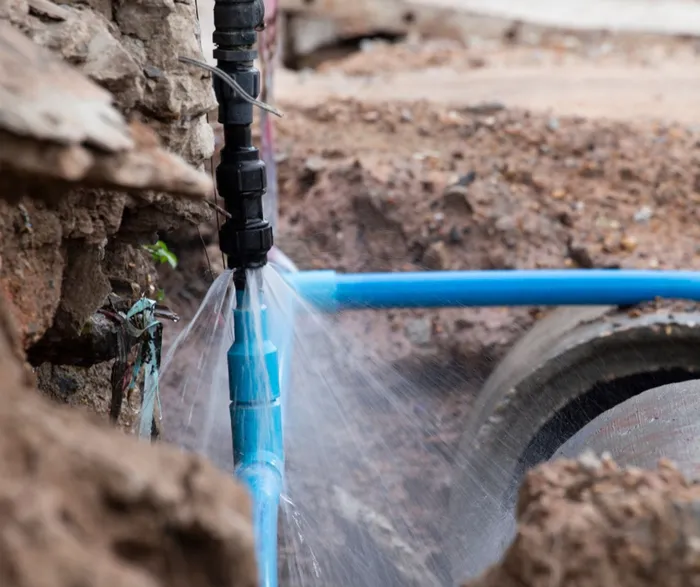
It is estimated that roughly 40% to 50% of treated, clean water in South Africa is lost before it reaches consumers.
Image: File
Homeowners, tenants and businesses in many regions in South Africa are contending with water “sharing programs” to redistribute limited supply across households, agriculture, and industry.
This is due to the increasing water scarcity, population growth, and climate variability.
Demand continues to rise due to urbanisation and economic pressure, according to an article published by the University of Johannesburg Investment Society.
In an opinion piece titled "From Leaks to Losses", the community of students passionate about finance and investment at the UJ says this is no longer just a service delivery issue, but an investment risk story unfolding in real time.
In the piece, the society asks what if nearly half of the water meant to power an economy never reaches its destination?
It says in SA that it is not a theoretical concept, but a reality.
“South Africa is bleeding water; an estimated 56% of treated supply is lost to leaks, illegal connections, poor maintenance, and non-payment as of April 2026.
"This confusing figure has forced the government to declare a national water crisis, putting 'water sharing' programs at the centre of investor attention policy.”
In February, President Cyril Ramaphosa announced the establishment of a National Water Crisis Committee, which he will personally chair.
This was as the government intensifies efforts to confront the country’s deepening water challenges.
Delivering the State of the Nation Address (SONA) this year, the President elevated water to one of the country’s most pressing concerns, with the problem plaguing both large metropolitan municipalities such as Johannesburg and smaller towns like Knysna and rural areas such as Giyani.
It says the risks are escalating quickly.
“Infrastructure failure is the biggest leading factor; leakages alone account for up to 80% of losses in some cities, while illegal connections worsen the strain.
"It is estimated that roughly 40% to 50% of treated, clean water in South Africa is lost before it reaches consumers.
"At a national level, municipalities are losing nearly half of the treated water, exposing deep inefficiencies and governance gaps. This not only threatens water security but also raises the risk of supply disruptions, agricultural decline, and social instability as demand continues to rise faster than supply.”
For investors, UJInvest says both threats and opportunities are viewed. On the one side, it says sectors like agriculture, mining, and manufacturing face rising operational insecurity and higher costs due to unreliable water access. Financial losses are already visible.
In February, the National Treasury report highlights that South Africa's eight metropolitan municipalities recorded roughly R8.66 billion in water losses, highlighting the economic scale of inefficiency. This indicates a severe, ongoing financial crisis in municipal water management, it says.
On the opportunity side, society says the crisis is having a growing demand for infrastructure investment, leak detection technology, and private-sector partnerships in water management. It says agriculture and industry are exposed, while water technology and conservation sectors stand to gain.
The long-term implications are weighty, says UJInvest. It says considering that SA is already classified as water-stressed, with projections suggesting a 17% water deficit by 2030 if current trends continue.
It says this figure comes from the 2018 National Water and Sanitation Master Plan, which identified a significant gap between water supply and demand.
“Without structural reform, water scarcity could become a binding constraint on economic growth and investor confidence. However, if water sharing programs are paired with infrastructure upgrades and stronger governance, a failing system can transform into a more efficient, resilient, and investment-ready water economy.”
South Africa’s latest Blue Drop, Green Drop and No Drop reports have been released, and the message is unmistakable: our national water system is in structural decline, and the collapse signatures are now too large, too consistent, and too interconnected to ignore, said Tarryn Johnston, the interpreter of water intelligence at Living Wisdom Strategic Solutions.
For years, the sector has spoken about “service delivery challenges”, “capacity constraints”, and “isolated failures”.
The 2026 Drop Reports close the door on that narrative. What we are seeing is not fragmentation - it is systemic patterning, says the interpreter.
The national Non‑Revenue Water (NRW) rate is 47.3%. That means almost half of all purified water never reaches a paying customer, they said.
According to them, this is not a leak problem but one of t governance, maintenance and operational discipline.
Some provinces are in even deeper distress:
Gauteng alone loses 431 million m³/year-nearly the entire Western Cape’s annual potable supply, says Johnston.
“South Africa can turn this around-but only if we confront the reality with honesty, competence and urgency.”
Independent Media Property