

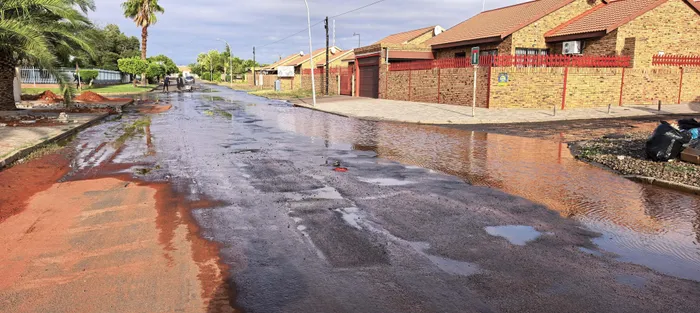
Municipal service delivery and good governance are essential for sustained development. Insufficient maintenance, delays in approvals and capacity constraints, are costly and deter investors.
Image: Danie van der Lith / DFA
An election year brings both uncertainty and opportunity for the property development sector.
While there can be short-term delays as municipalities navigate political transitions, election cycles also place the focus firmly on service delivery and infrastructure, says Barto van der Merwe, managing director of Renishaw Coastal Precinct.
He says the property sector continues to face challenges related to municipal service delivery and regulatory delays. While load-shedding has eased, the impact created a need for developers to invest in alternative energy and water, which is good news in the long run, he adds.
“Municipal service delivery and good governance are essential for sustained development. Insufficient maintenance, delays in approvals, and capacity constraints are costly and deter investors.
"This is why developers are increasingly investing in self-sufficient models that provide reliable services for residents and businesses.”
The MD says for developments such as Renishaw Coastal Precinct, they prioritise self-sufficiency in development design. “ These risks are largely mitigated, and investors benefit from a stable, long-term investment regardless of political cycles.”
The property management company states that South Africa’s property market began 2026 on a stronger footing, thanks to improved macroeconomic indicators and renewed investor confidence.
It states that, compared to the past year, the sector is experiencing a more stable interest rate environment following an extended period of rate cuts, improved electricity supply reliability, easing inflation, and a stronger rand.
“Compared to a decade ago, South Africa’s property sector is more resilient, with developers focusing on sustainability, mixed-use precincts, and self-sufficient models," says Renishaw Coastal Precinct.
Looking back three to five years, the contrast is even more pronounced, as the industry emerged from pandemic-related disruption, rising borrowing costs, and a lack of consumer confidence, it says.
“Regions such as the KZN South Coast, and developments like Renishaw Coastal Precinct, are benefitting from this shift as buyers focus on lifestyle appeal and investments with long-term growth potential.”
Developers rely on collaboration for success, which means working together to achieve a result that benefits all parties, including local communities and the natural environment, says van der Merwe.
He says working with the real estate sector and local government, they are able to assess the needs of investors and communities, read the market, and tailor their approach accordingly. “Early engagement with the local council and secure buy-in from key stakeholders is essential to achieving optimal turnaround times.
The MD urged financiers to continue to provide flexible funding structures. He says that alongside rate cuts, fuel reductions, and subdued inflation, this will bring more first-time buyers into the market.
“From government, we expect more predictability in policy, efficient planning processes, capacity to process applications efficiently, and partnerships. On the KZN South Coast, we’ve established strong relationships with local government and businesses, enabling this region to realise its full development potential.”
Service delivery is the invisible foundation of every successful development, says BPAS Architects founder, Landseer Collen.
He says where municipalities struggle to provide reliable water, electricity, roads and security, developers are forced to compensate. This amounts to a hidden tax on every project, he adds.
The multidisciplinary architecture and design firm says they expect a mixed impact from the election. “On the one hand, election cycles often slow decision-making as officials adopt a wait-and-see approach. On the other hand, elections also present an opportunity for reform and renewed accountability.”
In practice, they anticipate a two-speed market, Collen adds. “Capital will increasingly flow to municipalities with strong governance records, transparent processes and administrative capacity. Poorly run areas are likely to see continued disinvestment. Governance risk is being priced directly into investment decisions.”
Asked whether the local property development sector is at an ideal level, Van der Merwe says the local property sector is not yet operating at its full potential, but it is moving in the right direction, particularly in coastal regions.
He adds that the focus needs to be on quality over quantity, prioritising developments that integrate conservation, community upliftment, and economic inclusion.
“Precinct-style developments like Renishaw Coastal Precinct show growth can be achieved by aligning residential demand with commercial opportunity, green space preservation, and long-term regional planning.
"Continued emphasis on responsible development will ensure the sector grows steadily and sustainably.”
Speaking during the State of the Nation Address debate earlier this week, Minister of Cooperative Governance and Traditional Affairs (Cogta) Velenkosini Hlabisa affirmed President Cyril Ramaphosa's words on the centrality of fixing the many dysfunctional municipalities: a task which is being tackled through the review of both the White Paper on Local Government and the municipal funding model.
The White Paper on Local Government Review, which will be completed by March 31, will be a game-changer for our local governance system.
Deployment of officials will have to be on the basis of competency and professionalism, not political deployment, Hlabisa said.
“The White Paper on Local Government Review will place municipal governance on a sound footing and facilitate efficient cooperative governance. We will harness the potential within the institution of traditional and Khoisan leadership, creating genuine governance partnerships with Traditional and Khoisan Leaders,” the minister said.
Independent Media Property