

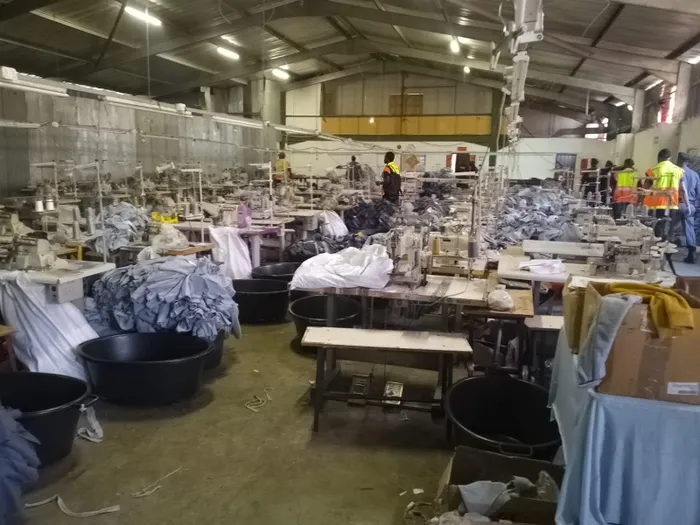
The Department of Trade and Industry (DTIC) says South African manufacturing cannot grow on the back of unsafe and illegal operations.
Image: Facebook/ Department of Employment and Labour
The Department of Trade and Industry (DTIC) says South African manufacturing cannot grow on the back of unsafe and illegal operations.
This comes after reports emerged that alleged non-compliant garment factories in Newcastle, KwaZulu-Natal, were operating under poor health and safety conditions, employing undocumented workers, and producing clothing for major retailers without approval.
In a statement issued to the media, the department said that such illegal operations distort competition, undermine compliant businesses, and expose workers to unsafe conditions.
"South Africa cannot grow its manufacturing base on the back of unsafe and illegal operations. Factories that evade labour standards distort competition, undermine compliant businesses, and expose vulnerable workers to unacceptable conditions," the department said.
"The objectives of the Retail Clothing, Textiles, Footwear and Leather Masterplan are grounded in the principle that industrial growth must occur within a sound governance framework of decent work, lawful business activity, and formalisation of the value chain."
The department also said that enforcement alone cannot resolve these risks and called on retailers, manufacturers, and regulators to work together to improve supply-chain accountability.
"This incident underscores that enforcement alone cannot resolve systemic risks in fragmented supply chains. Demand-side actors, particularly large retailers and brand owners, carry a corresponding responsibility to exercise meaningful due diligence in their procurement and supplier management practices. Moreover, there is a need for improved inter-departmental coordination and data visibility across the sector."
The department added, "Deputy Minister of Trade, Industry and Competition, Ms Alexandra Abrahams, will engage the Retail Clothing, Textile, Footwear, and Leather Masterplan Executive Oversight Committee to discuss the implications of the Newcastle matter."
"Strengthening voluntary and policy-linked disclosure mechanisms is just one of the essential mechanisms to improving visibility across supply chains and preventing illicit or exploitative production from entering formal retail channels."
"The DTIC remains committed to promoting formalisation and compliance across the value chain and creating an enabling environment for a competitive, inclusive, and labour-absorbing clothing and textile industry."
mthobisi.nozulela@iol.co.za
IOL Business